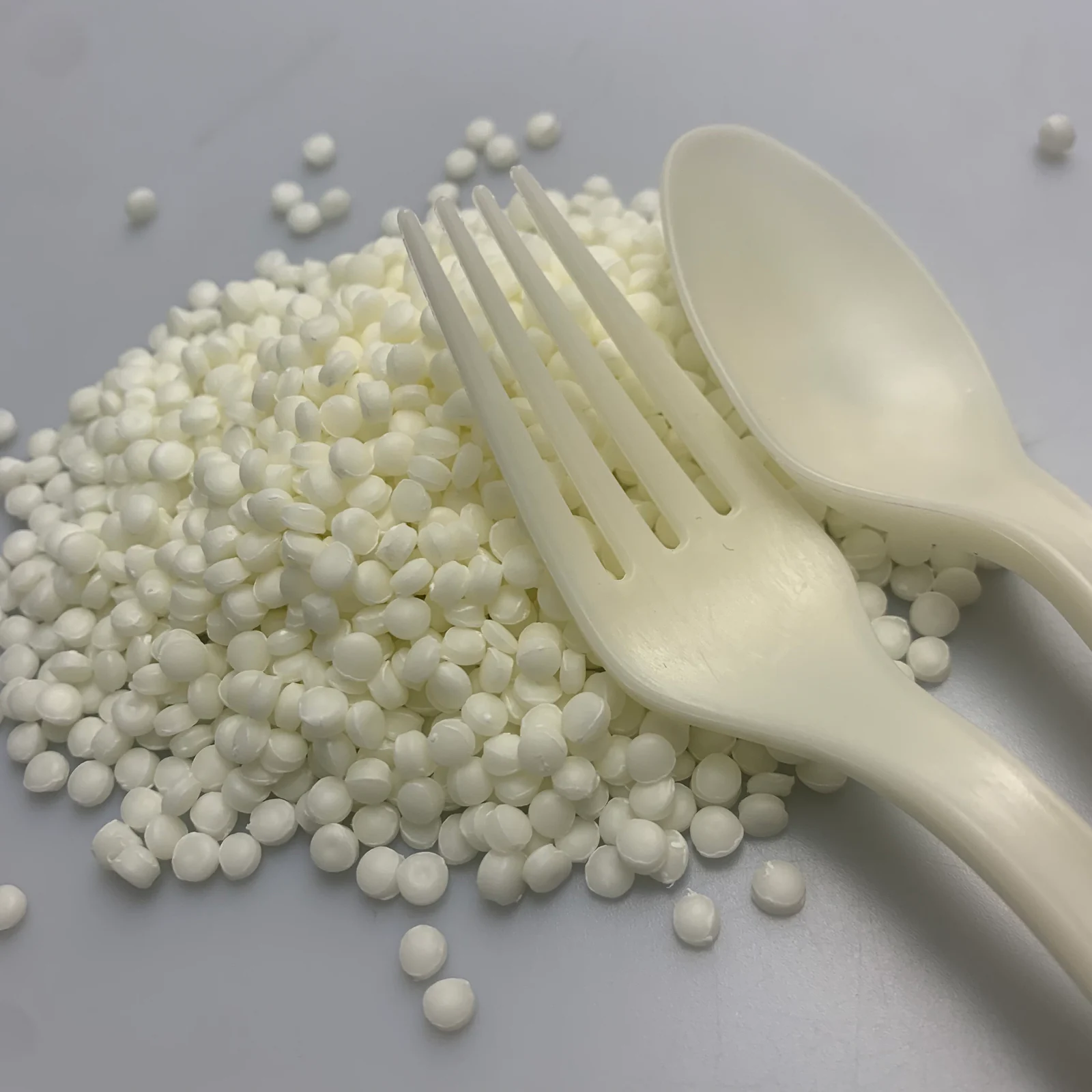
Material use
Use this ready-to-process compound directly, or blend it with pure PP in any proportion to adjust the fiber concentration and molded appearance. Run a molding trial after changing the blend ratio.
WYC-PP P179103
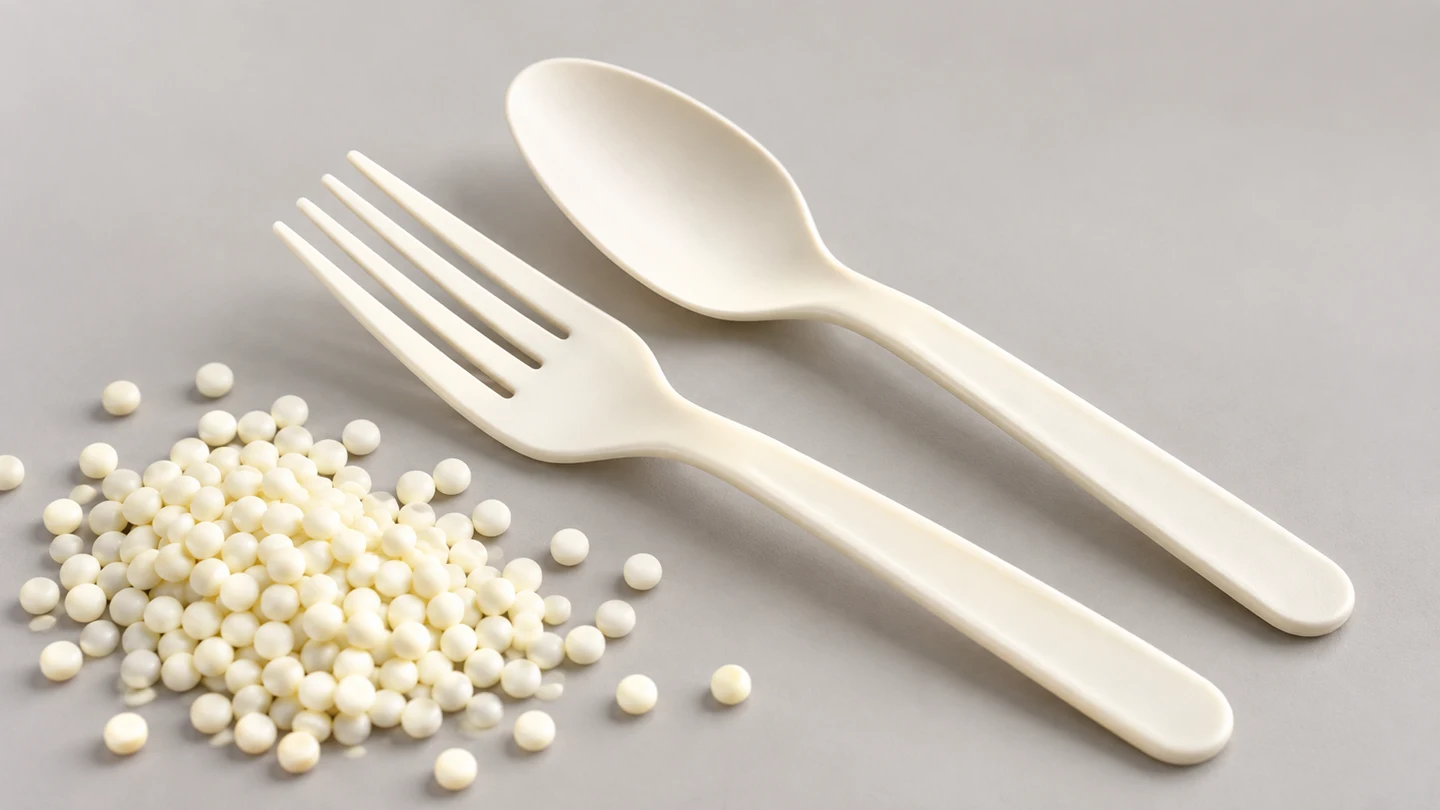
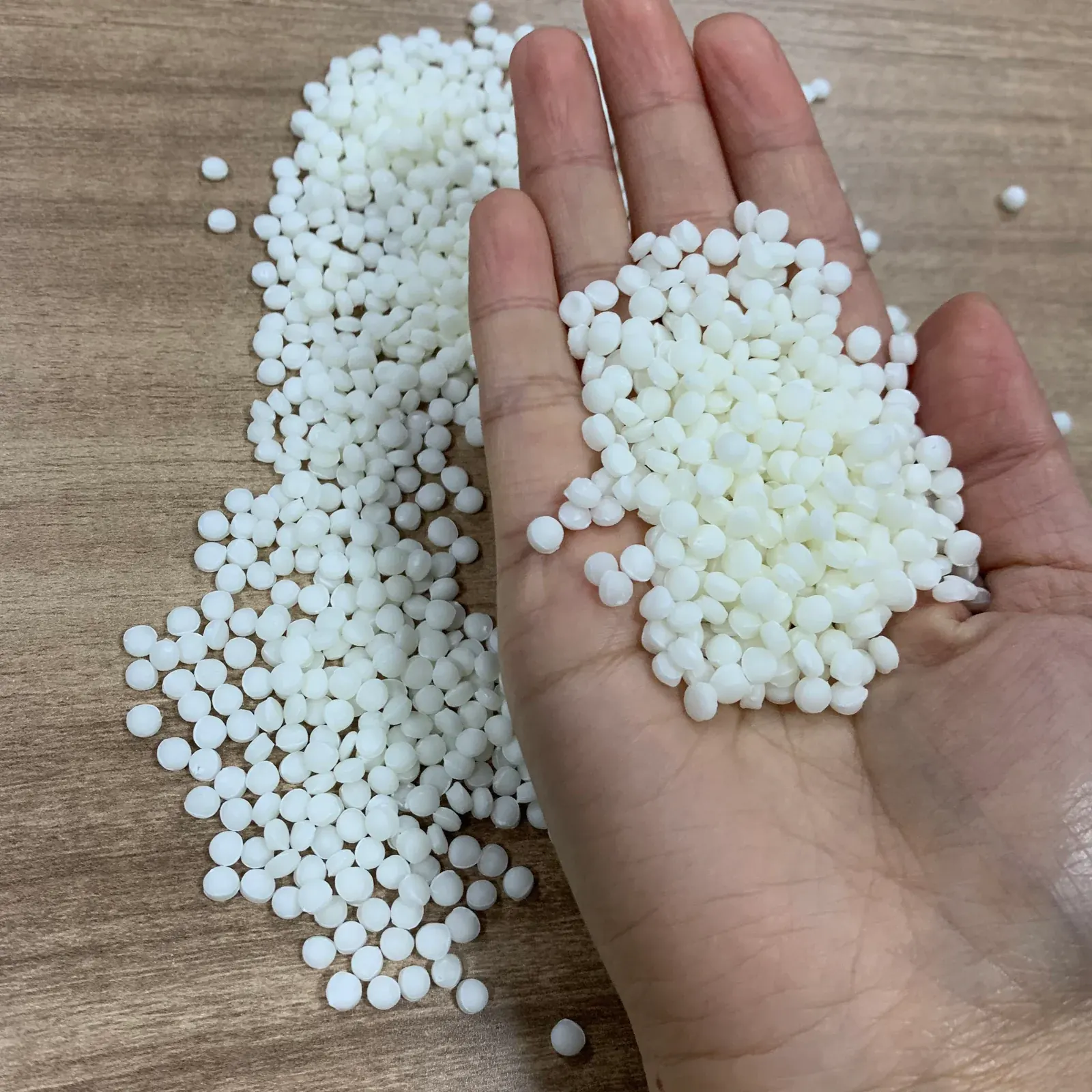
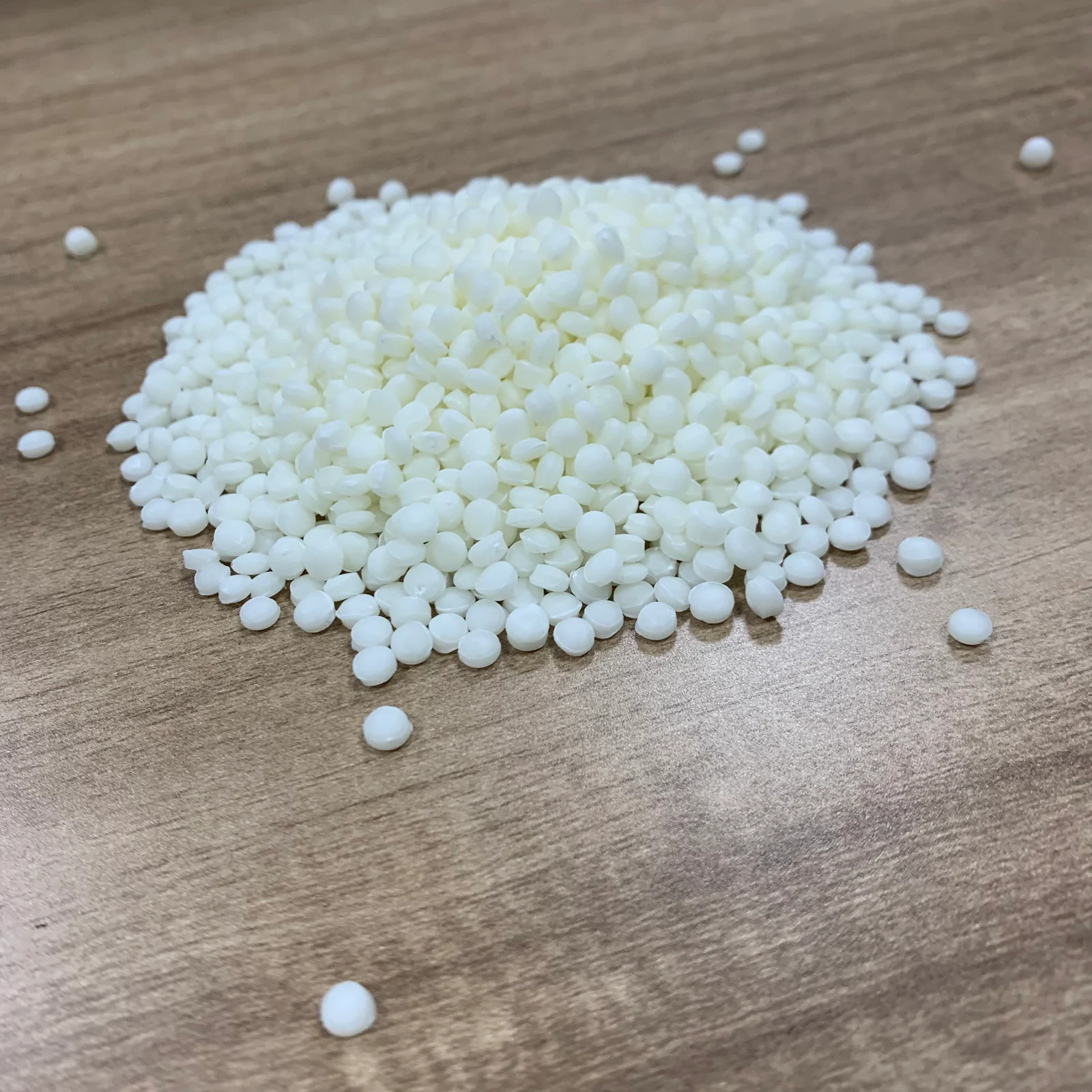
Corn Starch PP combines polypropylene with starch obtained from the corn kernel endosperm. Unlike coarser plant-fiber compounds, it has a light cream-to-white appearance with a smoother, more uniform surface and little visible fibrous grain. The material has a softer, less rigid character than many mineral- or wood-filled formulations and can form clean, lightweight molded parts. Typical applications include molded utensils, scoops, lightweight trays, clips and packaging components. The starch content alone does not mean the finished material is biodegradable.
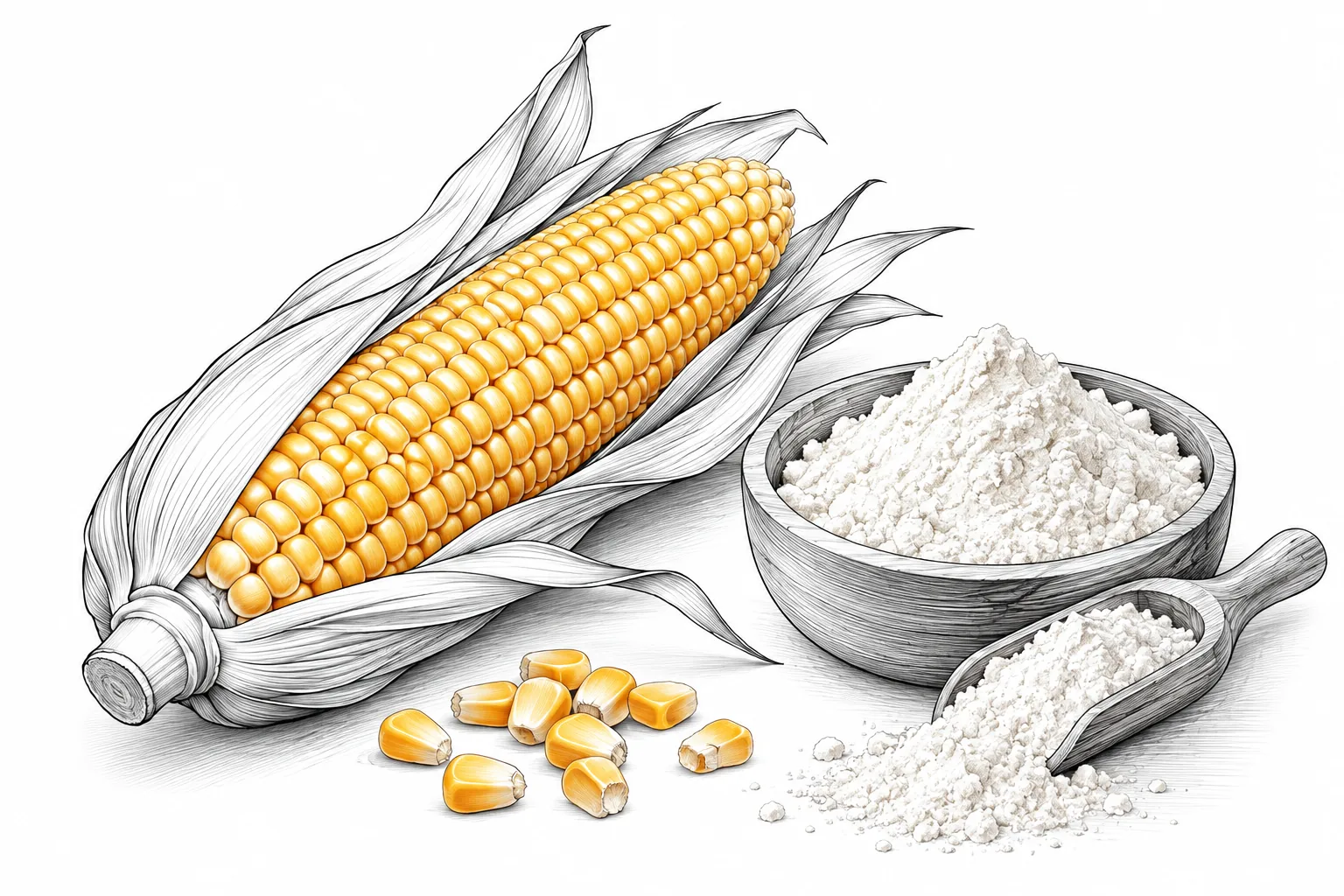
For this material, we use corn as the plant source.
Use this ready-to-process compound directly, or blend it with pure PP in any proportion to adjust the fiber concentration and molded appearance. Run a molding trial after changing the blend ratio.
Color matching is supported. Because the natural base is light, most color families can be developed, although the plant particles remain visible and may shift the final shade. Confirm the target with a molded color sample.
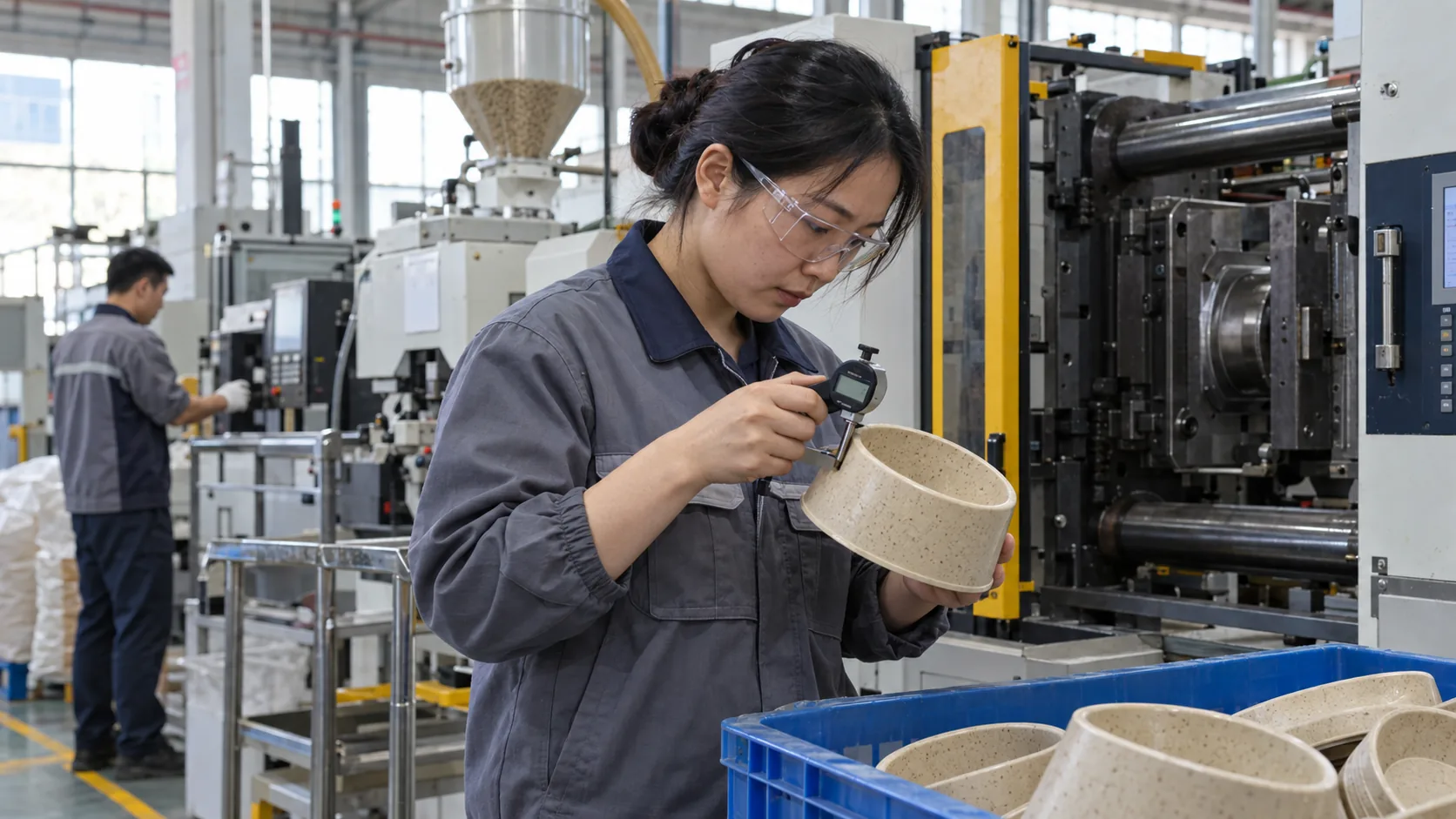
Injection molding and extrusion.
Use hardened, corrosion-resistant mold steel. Clean the mold promptly after processing, because plant-fiber composite material left in the tooling can corrode the mold if it is not removed in time.
| Stage | Reference setting |
|---|---|
| Drying | 90–100 °C for 6 h |
| Rear zone | 165–175 °C |
| Middle zone | 170–190 °C |
| Front zone | 175–195 °C |
| Mold | 45–80 °C |
Important: These settings are starting references only. Adjust them for the machine, mold, part geometry and residence time. Excessive temperature or residence time can scorch or carbonize the plant fiber; begin at the lower end and increase only as needed.
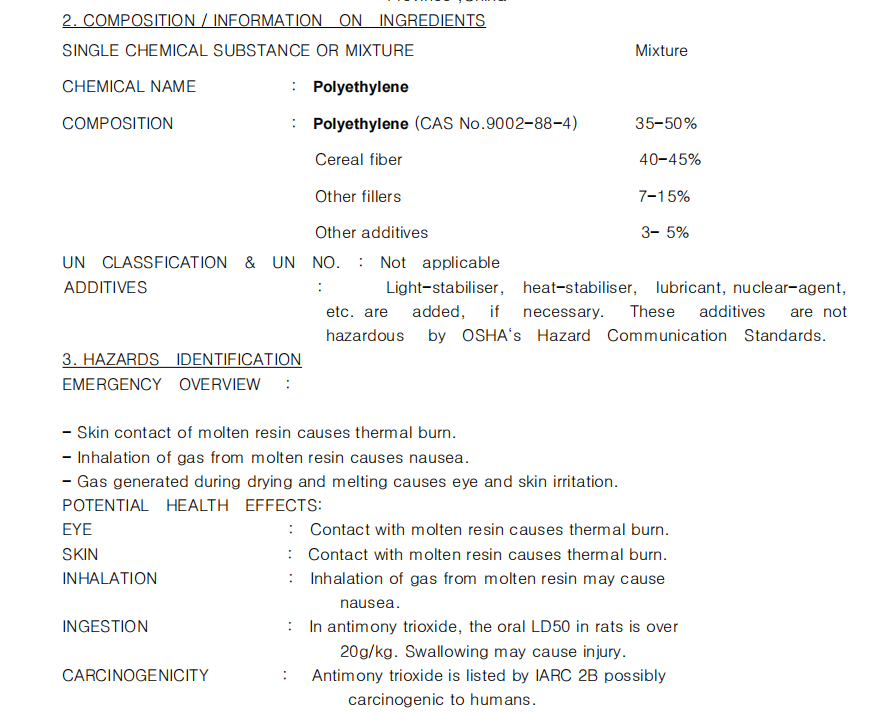
Material safety documentation can be provided for product handling and project review.
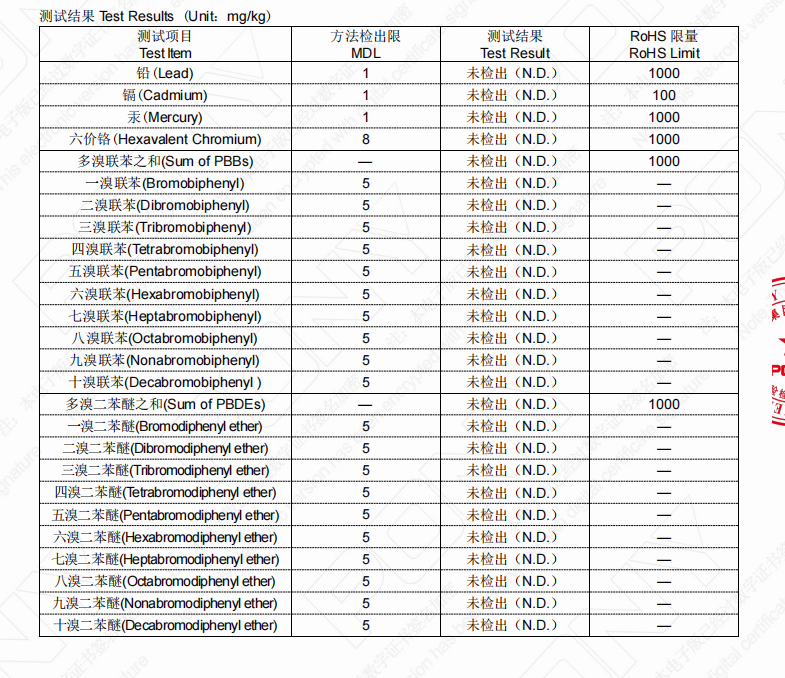
RoHS compliance documentation can be supported according to the applicable grade and production batch.
The images above are cropped reference excerpts. Document contents, report numbers and test details vary by material grade and production batch.
Material Consultation
Share your product, process, color and performance requirements. We can help review the grade, fiber content and sample-trial route.