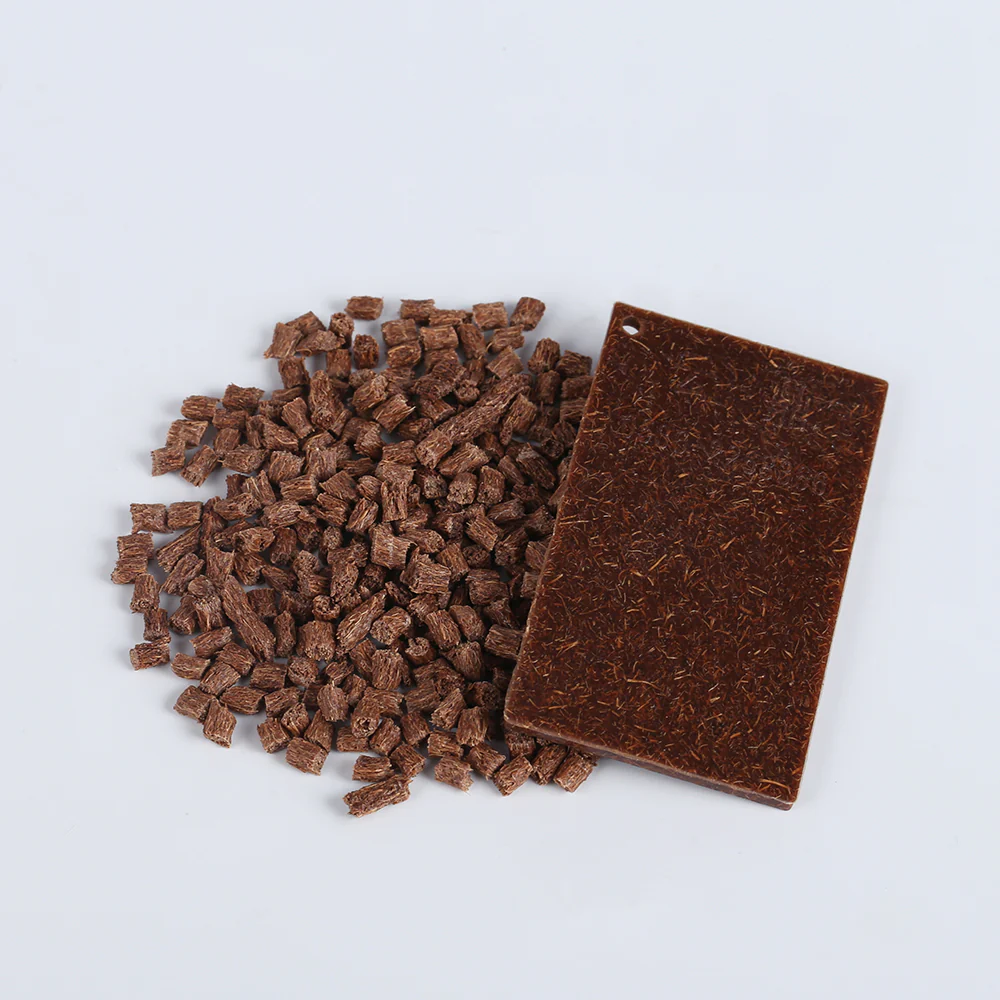
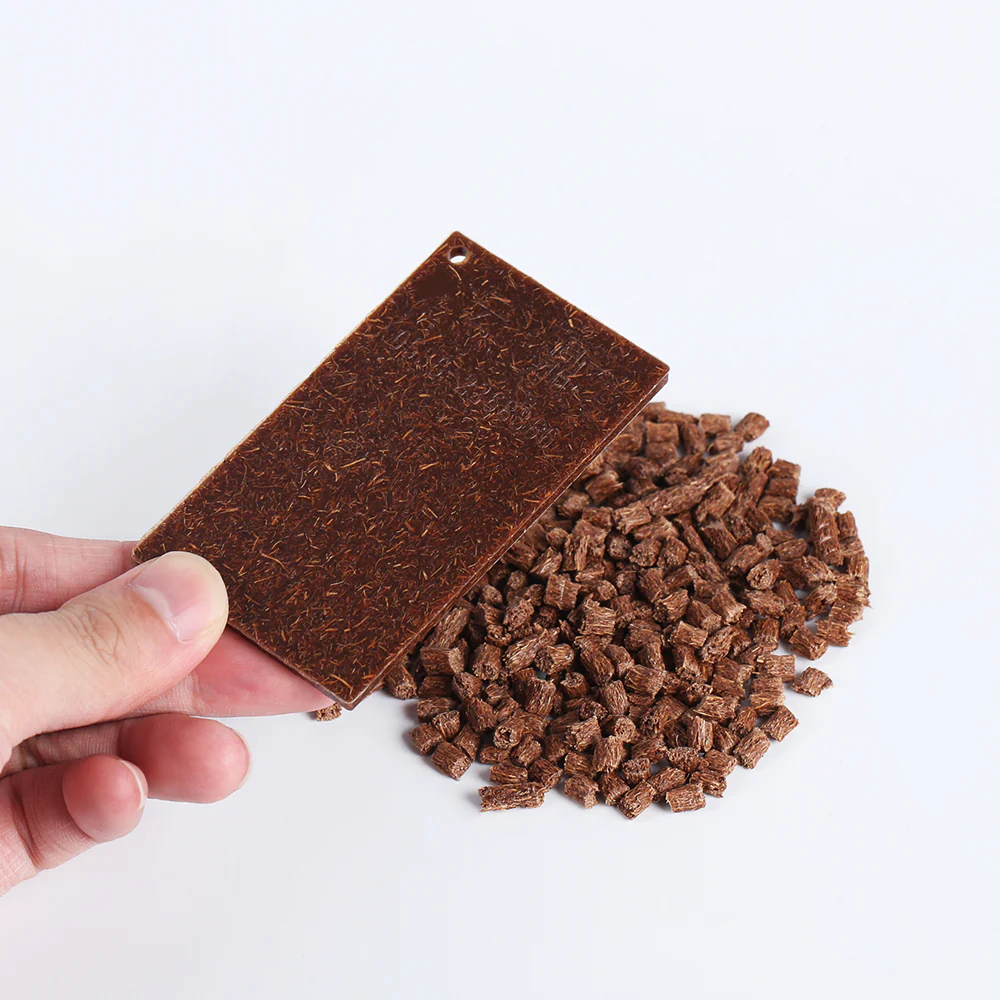
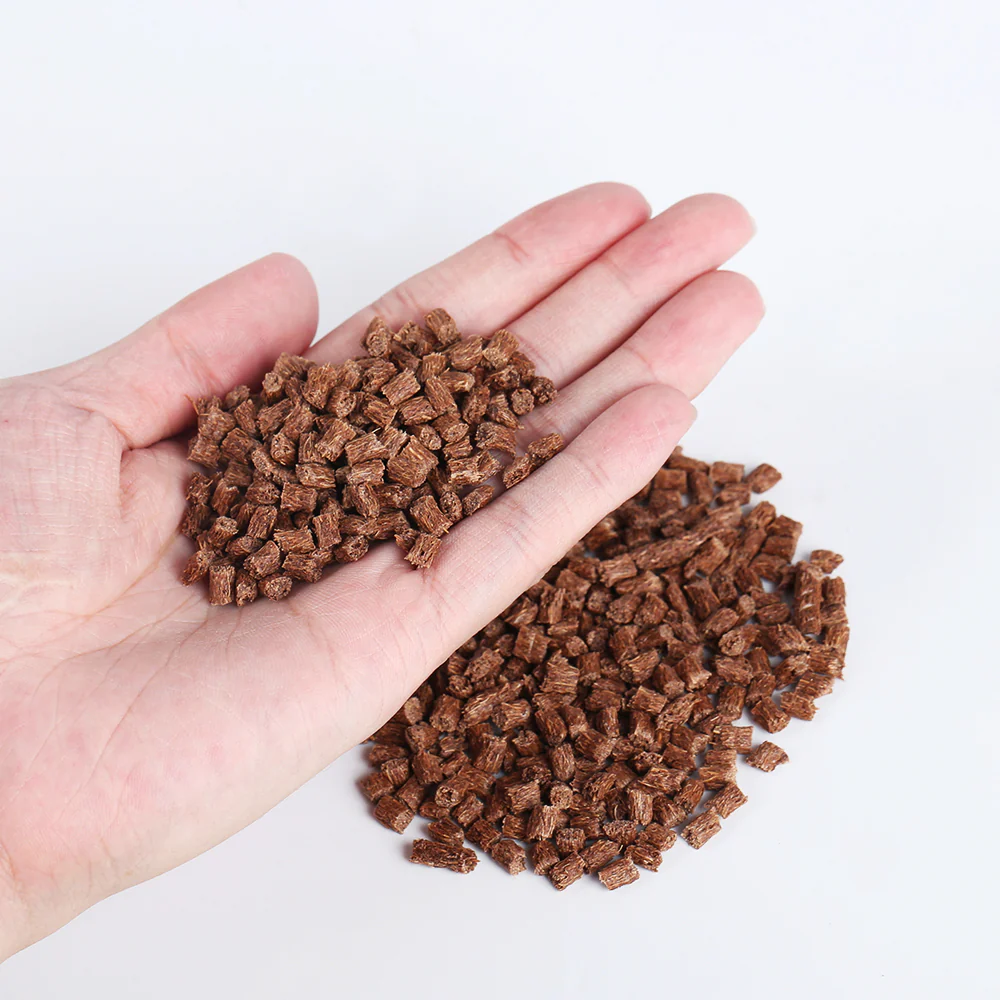
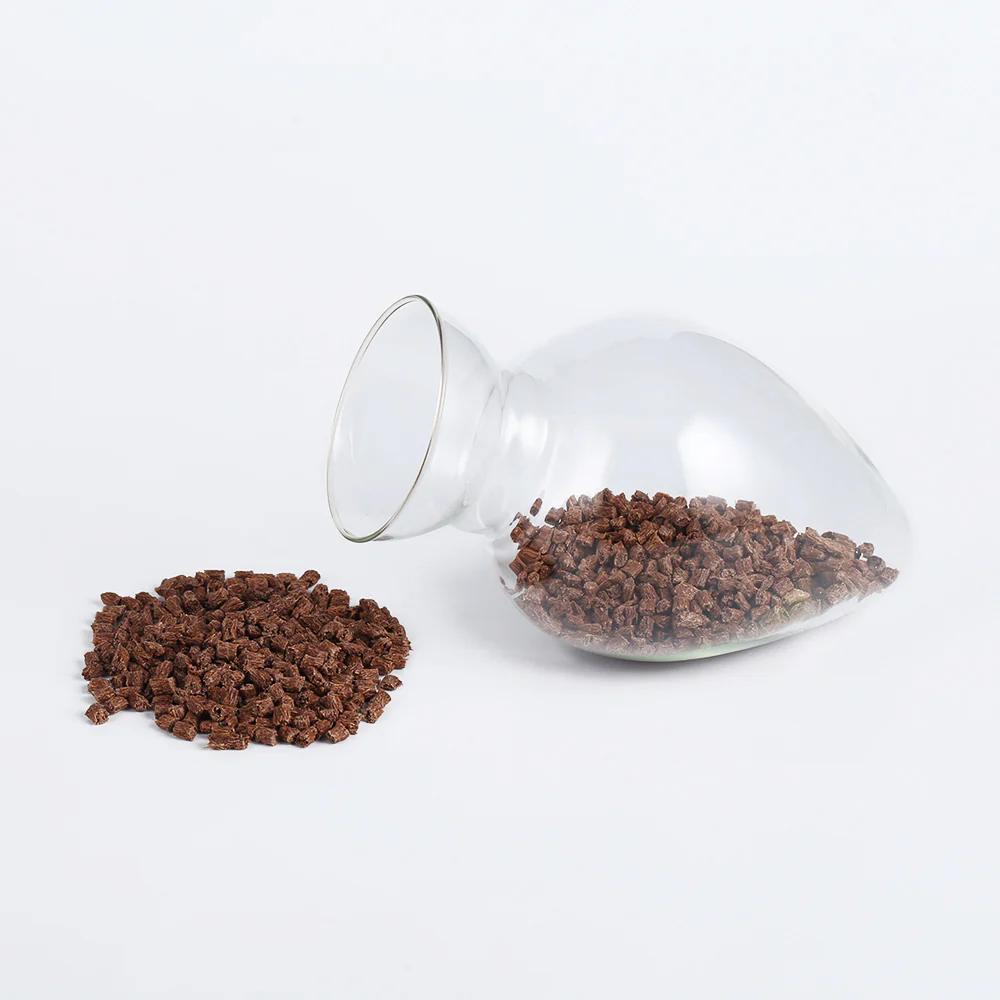
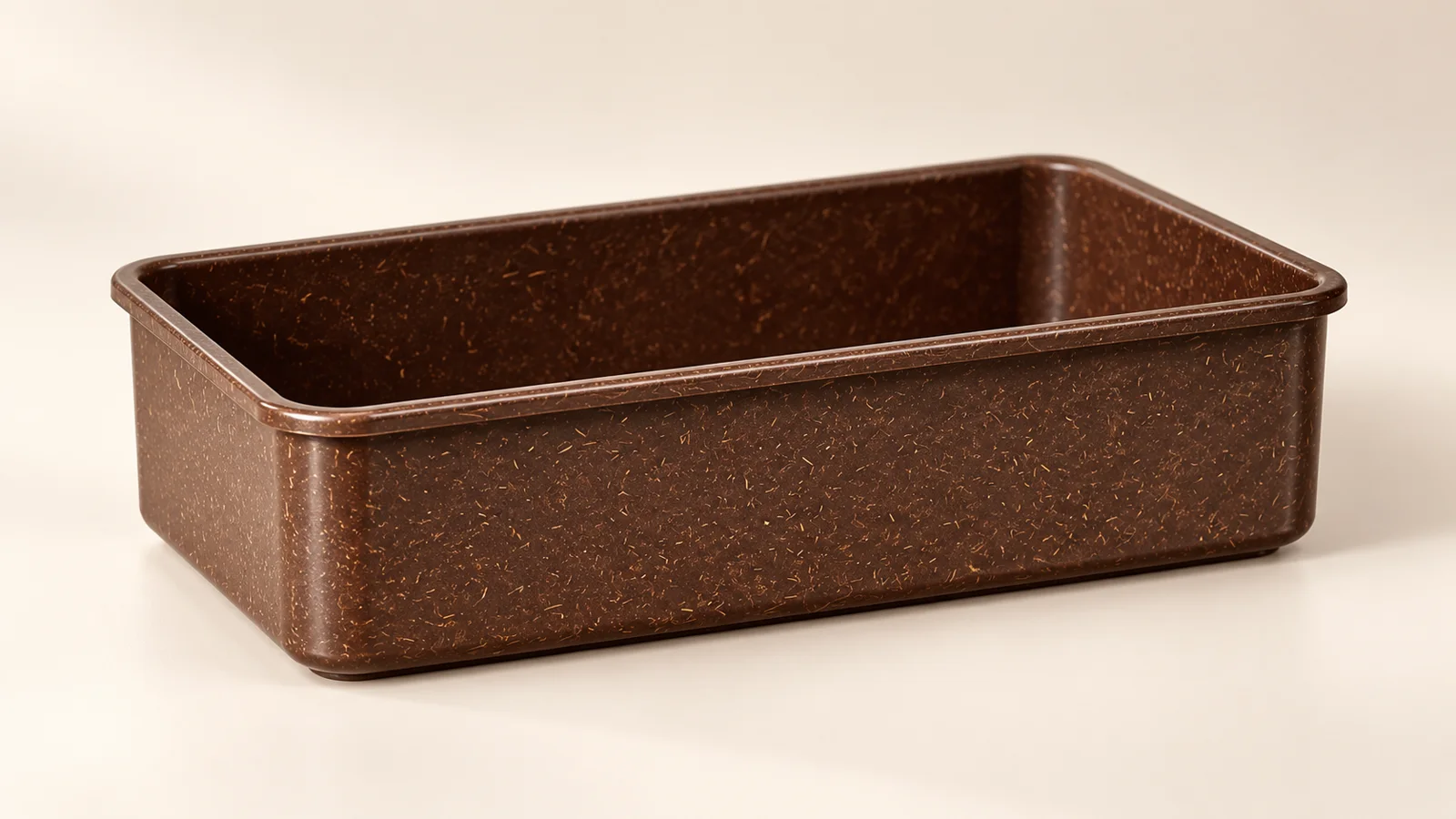
Coconut Fiber PP Masterbatch uses coir from the outer coconut husk in a polypropylene carrier. Coir has a recognizable warm brown color and a longer, more fibrous appearance than cereal or coffee fillers, creating bold natural streaks and an earthy surface after molding. The concentrated format allows manufacturers to adjust fiber visibility, color depth and texture by changing the addition level. It is intended for PP products such as plant pots, storage baskets, handles, pet accessories and decorative housings that benefit from a distinct tropical-fiber character.
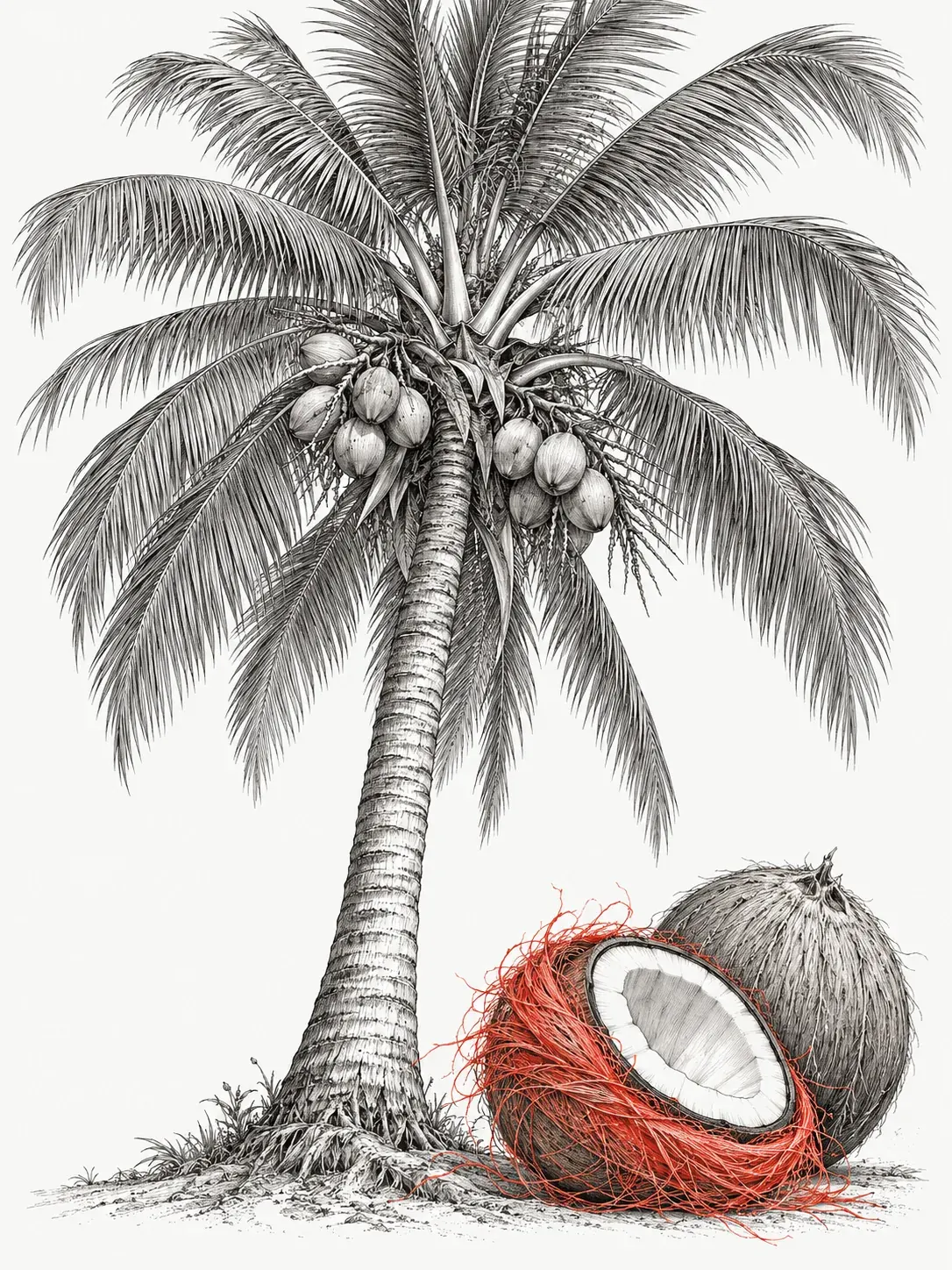
For this material, we use coconut as the plant source.
Physical and mechanical properties
PropertyValueTest standard
Density
1.17 g/cm³
ISO 1183
Tensile strength
40 MPa
ISO 527
Elongation at break
4.8 %
ISO 527
Elastic modulus
1,300 MPa
ISO 527
Flexural strength
82 MPa
ISO 178
Flexural modulus
4,400 MPa
ISO 178
Notched Izod impact strength
3.9 kJ/m²23 °C
ISO 180
Usage Guidelines and Processing Notes
Material use
This is a concentrated masterbatch and must be let down with pure PP. Use at least 1 part pure PP to 1 part masterbatch. Increasing the PP proportion makes individual fiber marks appear larger but more widely spaced, so confirm the ratio with a molded trial.
Color matching
Color matching is supported within a limited range. Because the natural base is dark, select dark color families; pale or bright colors cannot reliably cover the original tone. Confirm the target with a molded color sample.
Processing method
Injection molding.
Mold care
Use hardened, corrosion-resistant mold steel. Clean the mold promptly after processing, because plant-fiber composite material left in the tooling can corrode the mold if it is not removed in time.
Reference Processing Temperatures
Stage
Reference setting
Drying
120 °C for 2–3 h
Injection temperature
Around 175 °C
Mold
Set to mold and part requirements
Important: These settings are starting references only. Adjust them for the machine, mold, part geometry and residence time. Excessive temperature or residence time can scorch or carbonize the plant fiber; begin at the lower end and increase only as needed.
Supported Certificates
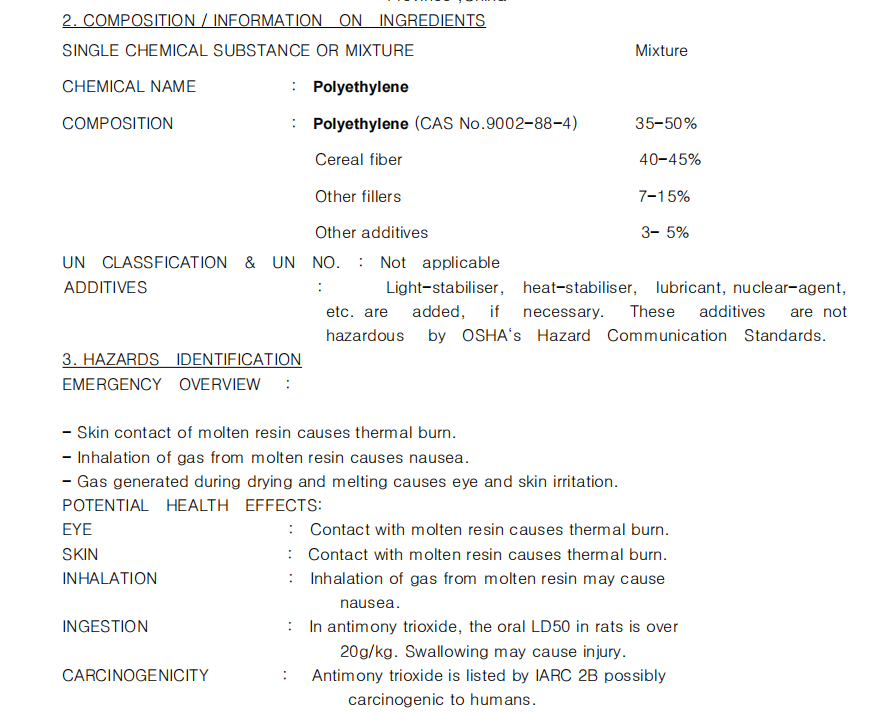
Reference report excerptMSDS
Material Safety Data Sheet
Material safety documentation can be provided for product handling and project review.
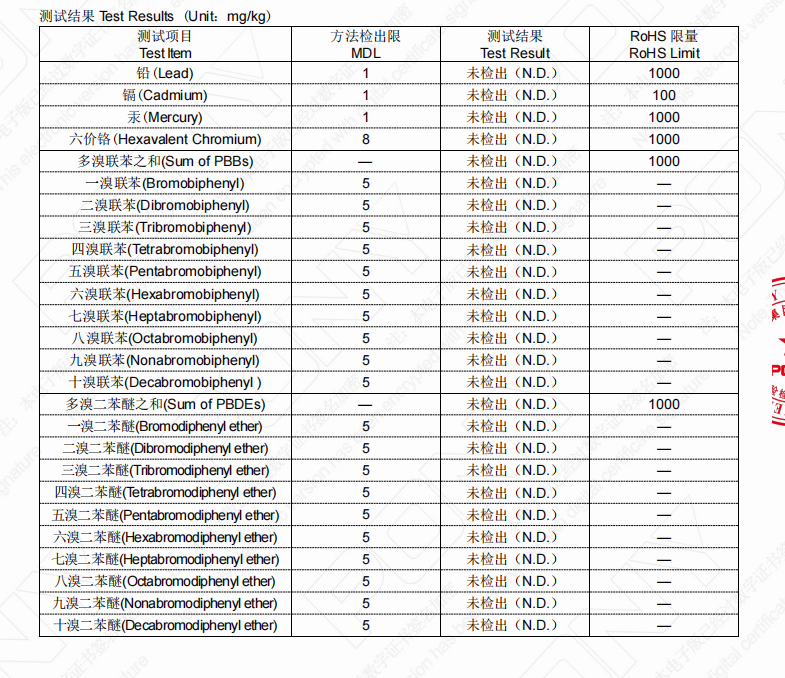
Reference report excerptRoHS
RoHS
RoHS compliance documentation can be supported according to the applicable grade and production batch.
The images above are cropped reference excerpts. Document contents, report numbers and test details vary by material grade and production batch.