
How to Use Tea-Fiber PP Masterbatch: WYC-PP P179CZML Drying, Blending, and Injection-Molding Guide
How to let down, dry and mold a concentrated tea-residue-fiber PP masterbatch while controlling black specks, odor, color variation, short shots and assembly dimensions.
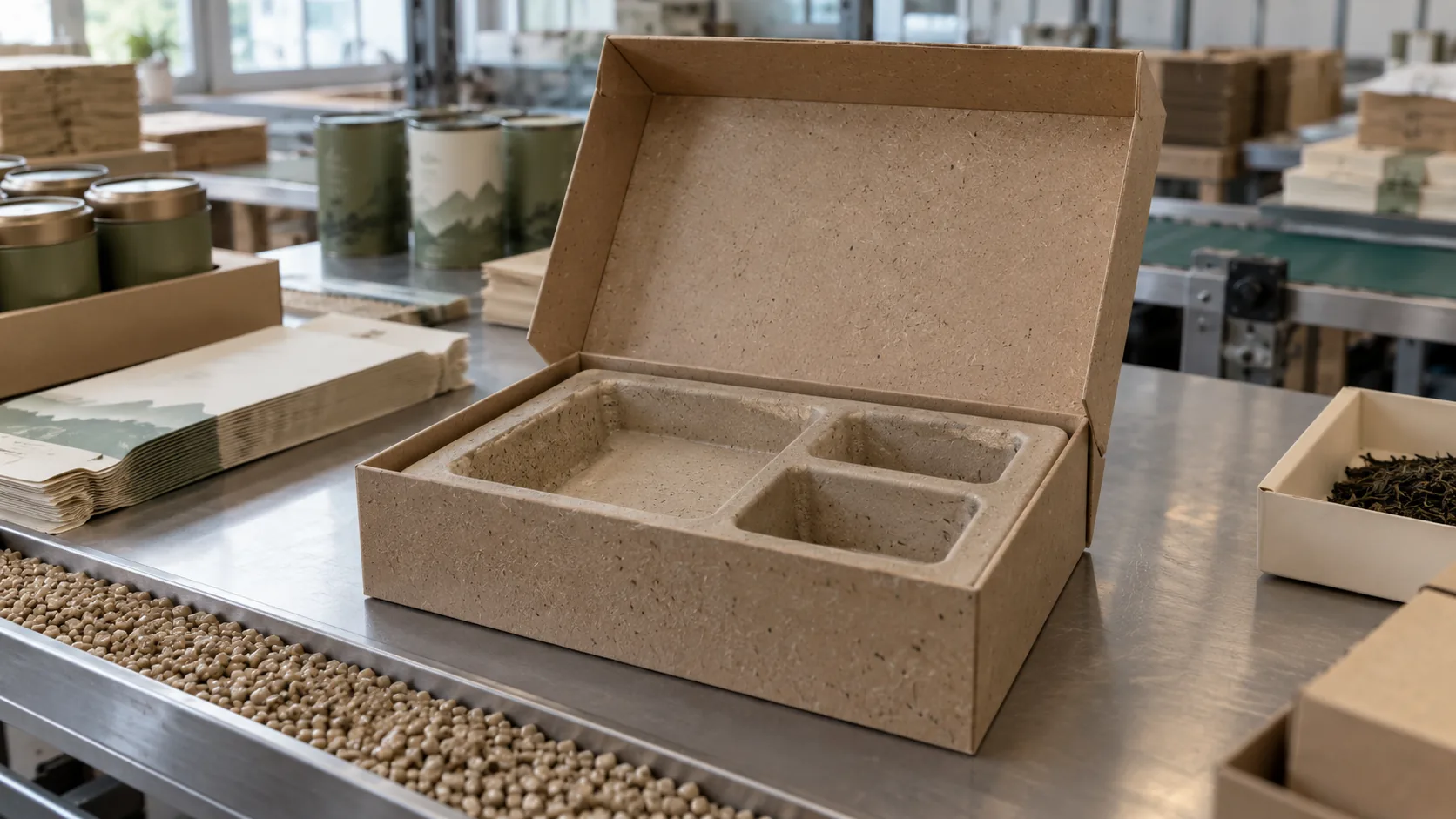
Buyer and engineer FAQ
Questions engineers ask before molding P179-CZML
Can P179-CZML be injection molded without adding pure PP?
No. P179-CZML is a concentrated tea-fiber masterbatch. Use at least one part pure PP to one part masterbatch, then optimize the ratio according to appearance, flow, impact performance and part geometry.
What drying and injection temperature should the first trial use?
Begin with dehumidified drying at 120°C for two to three hours and an injection temperature around 175°C. Fine-tune the settings according to the actual machine, mold, residence time and filling behavior.
What usually causes black specks and a scorched tea odor?
The most common causes are excessive melt temperature, long residence time, incomplete purging, moisture and repeated heat history from regrind. Stabilize drying first, then reduce unnecessary heat and residence time.
How should a food-contact tea-packaging project approve the material?
Define the final masterbatch-to-PP ratio, mold the production-representative part and evaluate the finished formulation for the target market. The same trial should confirm color difference, odor, shrinkage, closure dimensions and processing stability.
For a part-specific recommendation, share the drawing, wall thickness, mold structure, target market, color requirement and current molding window with wooyopet.
Plant-Fiber Masterbatch Is Not Sustainable Just Because It Is Added
In injection molding, yield and appearance are often determined less by the fiber itself than by how the masterbatch is let down, dried, processed and controlled from batch to batch. This guide uses wooyopet WYC-PP P179CZML tea-residue-fiber PP masterbatch and an anonymized tea-packaging project to explain the correct production route.
Plant-fiber PP is moving from a marketing option toward a material route that packaging buyers must evaluate seriously. The EU Packaging and Packaging Waste Regulation entered into force in February 2025 and applies in phases from August 2026. Its 2030 recycled-content requirements vary by packaging type: 10% for contact-sensitive non-PET plastic packaging, 30% for contact-sensitive PET and single-use beverage bottles, and 35% for other plastic packaging. Bio-based content, recycled content and food-contact compliance are assessed separately, so packaging specifications should define each target clearly.
Why Tea Residue Is Attracting Material Buyers
Tea production and ready-to-drink tea processing generate a large, continuous stream of spent tea residue. After brewing, the remaining biomass still contains cellulose, fine botanical particles and naturally recognizable color. Converting part of this residue into a PP masterbatch gives packaging and household products a visible material identity while reducing reliance on purely mineral-filled appearance effects.
Spent tea residue gives molded PP a muted botanical tone, fine leaf specks and a subtle plant aroma. Tea polyphenols and related components also create potential for differentiated functional development. Where antimicrobial performance is required, it should be specified and verified on the approved finished formulation and molded part.
Why Processing Discipline Matters
Plant fiber absorbs moisture, can discolor or scorch under excessive heat and lowers flow at higher loadings. Poor dispersion creates clusters, black points and local weakness; repeated heat history deepens color and odor; unstable mixing ratios cause visible batch-to-batch variation. wooyopet therefore treats P179-CZML as an engineering masterbatch with its own let-down and processing window—not as a powder that can simply be mixed into PP.
The production objective is not simply to put tea residue into a plastic part. It is to obtain a repeatable surface, predictable molding behavior, reliable assembly dimensions and a final formulation that can be assessed for its intended market.
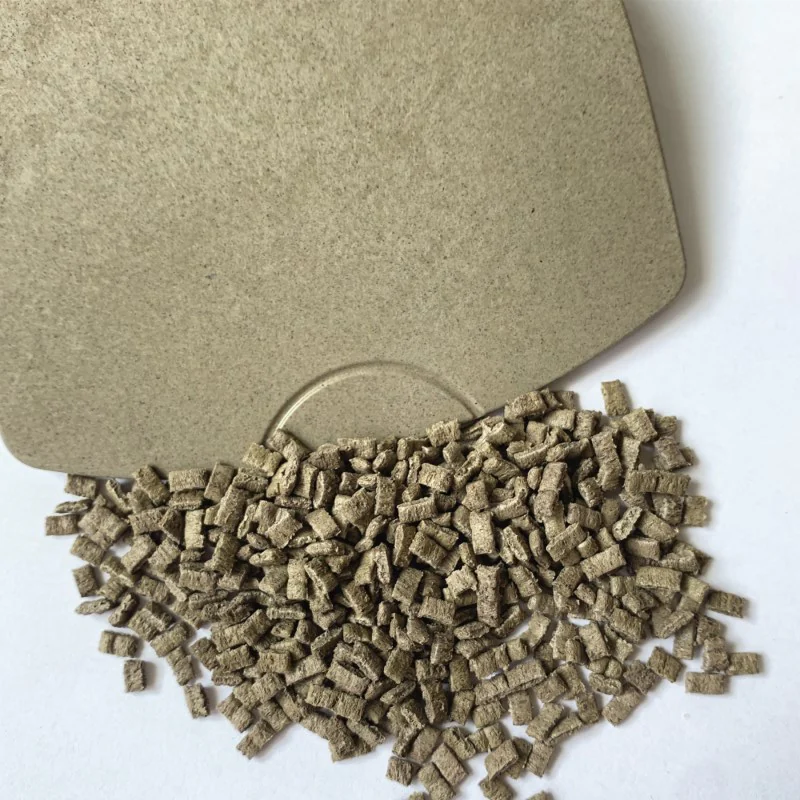
P179-CZML Performance Profile
P179-CZML is a concentrated tea-colored pellet masterbatch developed for blending with PP. Its typical material profile provides a practical starting point for product design, mold trials and process-window development.
| Item | Typical Value | Test Method / Description |
|---|---|---|
| Plant-fiber content | 40% | Tea-residue-fiber masterbatch |
| Form | Tea-colored pellets | Concentrated masterbatch for PP let-down |
| Tensile strength | 27 MPa | ISO 527 |
| Elongation at break | 11% | ISO 527 |
| Flexural strength | 45 MPa | ISO 178 |
| Flexural modulus | 1,337 MPa | ISO 178 |
| Notched Izod impact, 23°C | 5 kJ/m² | ISO 180 |
| Density | 1.08 g/cm³ | ISO 1183 |
| Melt-flow rate | 7 g/10 min | Typical masterbatch value |
| Shore hardness | 72 HD | Typical masterbatch value |
This profile indicates a balanced material direction rather than a brittle, highly rigid engineering plastic. A 1,337 MPa flexural modulus, 11% elongation and 5 kJ/m² notched impact value can support tea-canister lids, box inserts, tea trays and moderately complex molded parts after the final blend ratio is validated.
Density also affects purchasing economics. At 1.08 g/cm³, the masterbatch is denser than typical unfilled PP at roughly 0.90 g/cm³. Because P179-CZML is blended with pure PP, the density of the production compound varies with the selected let-down ratio.
Five Controls for Using P179-CZML Correctly
1. Treat It as a Concentrated Masterbatch
P179-CZML is a concentrated tea-residue-fiber PP masterbatch that must be let down with pure PP. Use at least one part pure PP to one part masterbatch. A 50/50 masterbatch-to-PP blend is therefore the highest-concentration starting point. Increasing the pure-PP proportion lowers the overall fiber concentration and changes the spacing and visual size of the fiber marks, so every ratio requires a molded trial.
2. Dry at 120°C for Two to Three Hours
Use 120°C for two to three hours as the initial drying condition. Use dehumidified, sealed drying equipment and prevent dried material from reabsorbing moisture. Bubbles, silver streaks, rough surfaces, gas and reduced strength are common signs of inadequate moisture control. Regrind adds thermal history and color risk; validate it separately and keep the proportion low during appearance-sensitive trials.
Before releasing material to the machine, confirm that the dryer has reached its operating condition, the hopper remains closed and the transfer path does not expose the dried blend to humid plant air. In humid seasons, an open hot-air hopper may warm the pellets without removing enough moisture. A sealed dehumidifying system gives a more stable result.
3. Start Near 175°C and Minimize Residence Time
The recommended starting point is an injection temperature around 175°C. Begin close to that point and increase only as required by filling behavior. Excessive temperature or residence time can scorch or carbonize the tea fiber, producing black specks, heavy odor and gas. The broad 170–195°C range sometimes used for plant-fiber PP should not replace the grade-specific starting point, and 200°C should not be treated as a normal target.
Keep the feed end conservative, raise the middle and front zones only enough to achieve uniform melting, and avoid an unnecessarily hot nozzle. When the machine pauses, purge or empty the barrel according to the validated shutdown procedure so that plant fiber does not remain under heat for an extended period.
4. Use Controlled Shear and Pressure
Use medium-low screw speed and a moderate back pressure: too much shear damages fiber and raises heat history, while too little mixing can leave the appearance uneven. Use a moderate injection speed and raise holding pressure only enough to stabilize shrinkage, weld lines and lid dimensions. With a typical MFR of 7 g/10 min, the material may need more injection pressure than a high-flow commodity PP, but the required pressure depends on the actual machine, gate, runner, wall thickness and flow length.
Change one variable at a time during the trial. If a short shot appears, first confirm drying, feed consistency, venting and gate condition before adding heat. If the part fills but shows deep weld lines or unstable snap engagement, tune injection speed, holding pressure and holding time against dimensional measurements rather than appearance alone.
5. Validate Color, Cleaning and the Let-Down Ladder
Run a ratio ladder using the intended food-contact PP base resin—for example 50/50, 40/60 and 30/70 masterbatch-to-PP—and compare fill, shrinkage, ΔE color difference, odor and assembly dimensions. Purge thoroughly with PP when changing materials. Require a supplier color-control range and retained samples because natural tea feedstock can vary. Use hardened, corrosion-resistant mold steel and clean the tooling promptly after production, as residue left in the mold can contribute to corrosion.
Use gravimetric dosing where possible. A hand-mixed batch can look acceptable for a small trial yet drift during continuous production as pellets segregate in the hopper. Record the masterbatch lot, PP lot, blend ratio, dryer condition, machine settings and molded color standard for each approval run. These records make later color or odor deviations much easier to trace.
Regrind should be treated as a separate input, not as free material. It carries extra heat history and can change color, odor, flow and fiber length. Establish a maximum regrind ratio only after a controlled trial, and keep virgin-only reference parts for comparison.
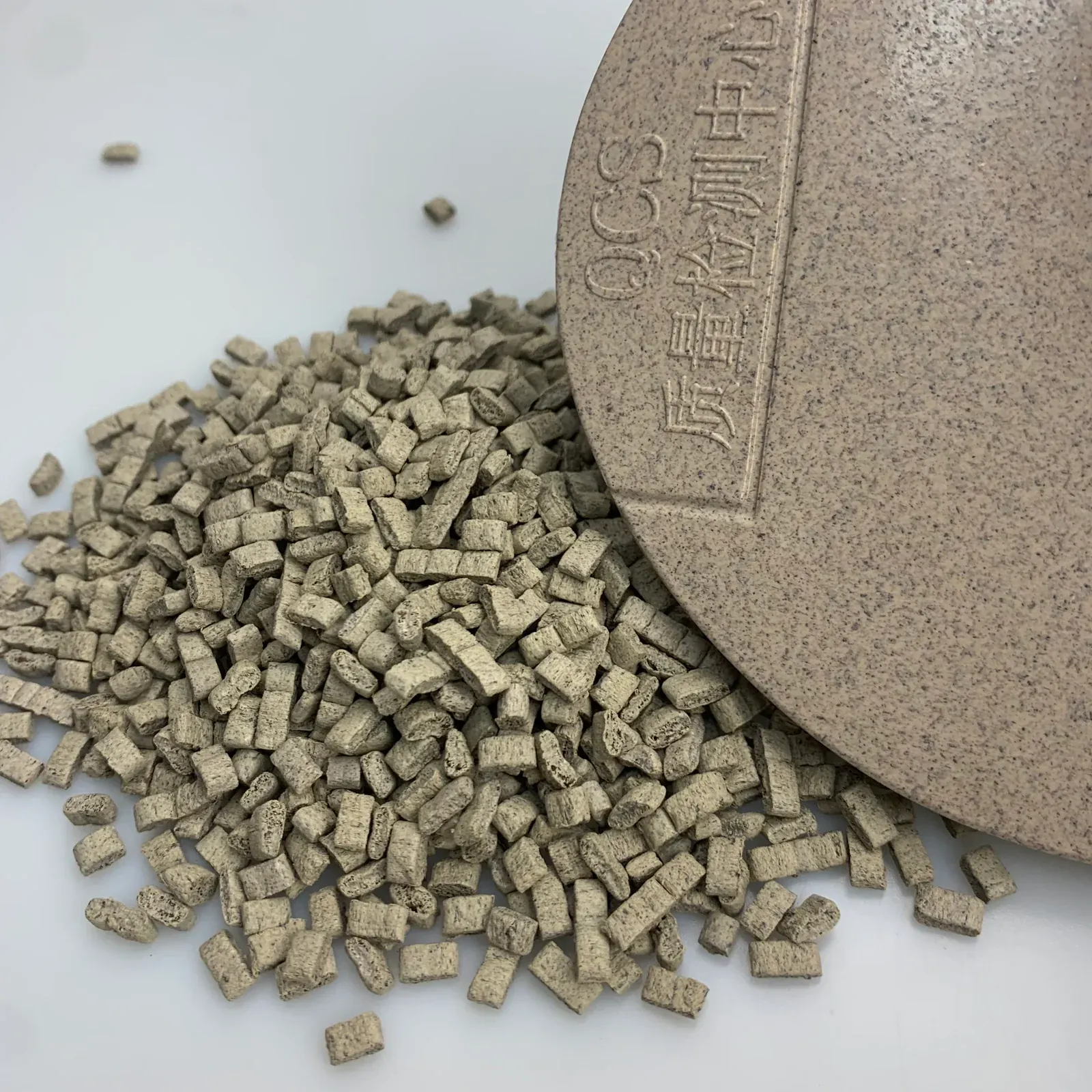
Case Study: Tea-Packaging Brand T
An anonymized contemporary tea brand planned a tea-canister lid and box insert with a natural tea tone, matte texture, subtle aroma, food-contact suitability and stable snap engagement. Its first trial directly mixed ordinary PP with tea powder at about 20% powder. Drying was 80°C for two hours, melt settings ranged from 180°C to 200°C and mold temperature was 60°C.
The result was a cluster of problems: black specks, uneven color, strong scorched odor, brittle lid edges, unstable closure, deep weld lines, occasional short shots and only about 81% production yield. Review showed three main causes—poor dispersion from direct powder blending, inadequate drying and excessive heat.
The low-cost powder route also created a narrow and unstable operating window. Operators tried to solve short shots with more heat and speed, which made the odor and black-point problem worse. Because the tea powder was not pre-dispersed into a controlled pellet, the surface appearance changed as the loose powder fed unevenly.
First Correction: Use a Real Masterbatch and Reset the Window
The direct powder route was replaced with P179-CZML blended with food-contact PP. The team started with dehumidified drying at 120°C for two to three hours and injection near 175°C, then tuned the machine conservatively. Screw speed was reduced, back pressure kept moderate, injection changed from high to medium speed and holding pressure increased only as required. Black specks and odor fell sharply, while color uniformity improved.
| Control | Initial Direct-Powder Trial | Corrected Starting Direction |
|---|---|---|
| Material format | Ordinary PP + loose tea powder | P179-CZML masterbatch + food-contact PP |
| Drying | 80°C / 2 h | 120°C / 2–3 h, dehumidified and sealed |
| Injection temperature | 180–200°C | Start around 175°C; increase only if filling requires it |
| Screw / back pressure | Commodity-PP settings | Medium-low screw speed; moderate back pressure |
| Injection / holding | High speed; standard hold | Medium speed; holding pressure tuned to part dimensions |
Second Correction: Use a Compliant Blend Ratio
The team compared several let-down ratios and selected a 50% P179-CZML / 50% food-contact PP starting formulation. This ratio retained the tea-fiber appearance, improved filling and provided a stable basis for color and assembly tuning. Melt flow and density were measured on the approved production blend rather than calculated from the individual components.
Regrind was separated from the first approval runs so that the team could establish a clean baseline. Once the surface, odor and lid dimensions were stable, regrind was evaluated in a controlled ladder rather than returned automatically. The machine was purged with PP at each material change, and molded color standards were retained for subsequent lots.
After color and assembly tuning, the lid and insert showed a consistent muted tea-colored matte surface, black specks were largely eliminated, odor became lighter and closure stability improved. Reported line yield increased from about 81% to 96%. For commercial food-contact applications, the final formulation and molded article should be evaluated against the requirements of the target market.
The case demonstrates why a plant-fiber project cannot be approved by resin name alone. Material format, let-down ratio, drying, residence time, shear, venting, holding and color control work as one system. Once that system is documented, the same material direction can be extended to tea-canister lids, box inserts, tea trays and related molded components with much lower scale-up risk.
Common Defects and Troubleshooting
| Defect | Likely Cause | First Checks |
|---|---|---|
| Black specks | Fiber scorching, excessive residence time, contaminated barrel or high regrind | Return toward the 175°C starting point, shorten residence time and purge thoroughly |
| Heavy or scorched odor | Excessive heat, inadequate drying or fiber degradation | Verify 120°C / 2–3 h dehumidified drying and reduce melt heat |
| Mottling or color variation | Uneven blend, feedstock variation or unstable shear | Verify gravimetric ratio, mixing, screw speed, ΔE limit and retained batch sample |
| Short shot | Insufficient flow, pressure or gate capacity | Increase pure-PP let-down, adjust pressure gradually and review gate/vent design |
| Brittle edge or poor snap fit | Too much masterbatch, degraded regrind or incorrect holding | Reduce masterbatch fraction, control regrind and retune hold pressure/time |
| Deep weld line | Low flow-front temperature, poor venting or insufficient hold | Review gate and venting first, then adjust speed, heat and holding carefully |
| Bubbles or silver streaks | Moisture or reabsorption after drying | Check dryer dew point, hopper sealing and material transfer |
| Yellowing | Excessive temperature, long residence time or repeated heat history | Lower temperature, shorten residence and reduce regrind |
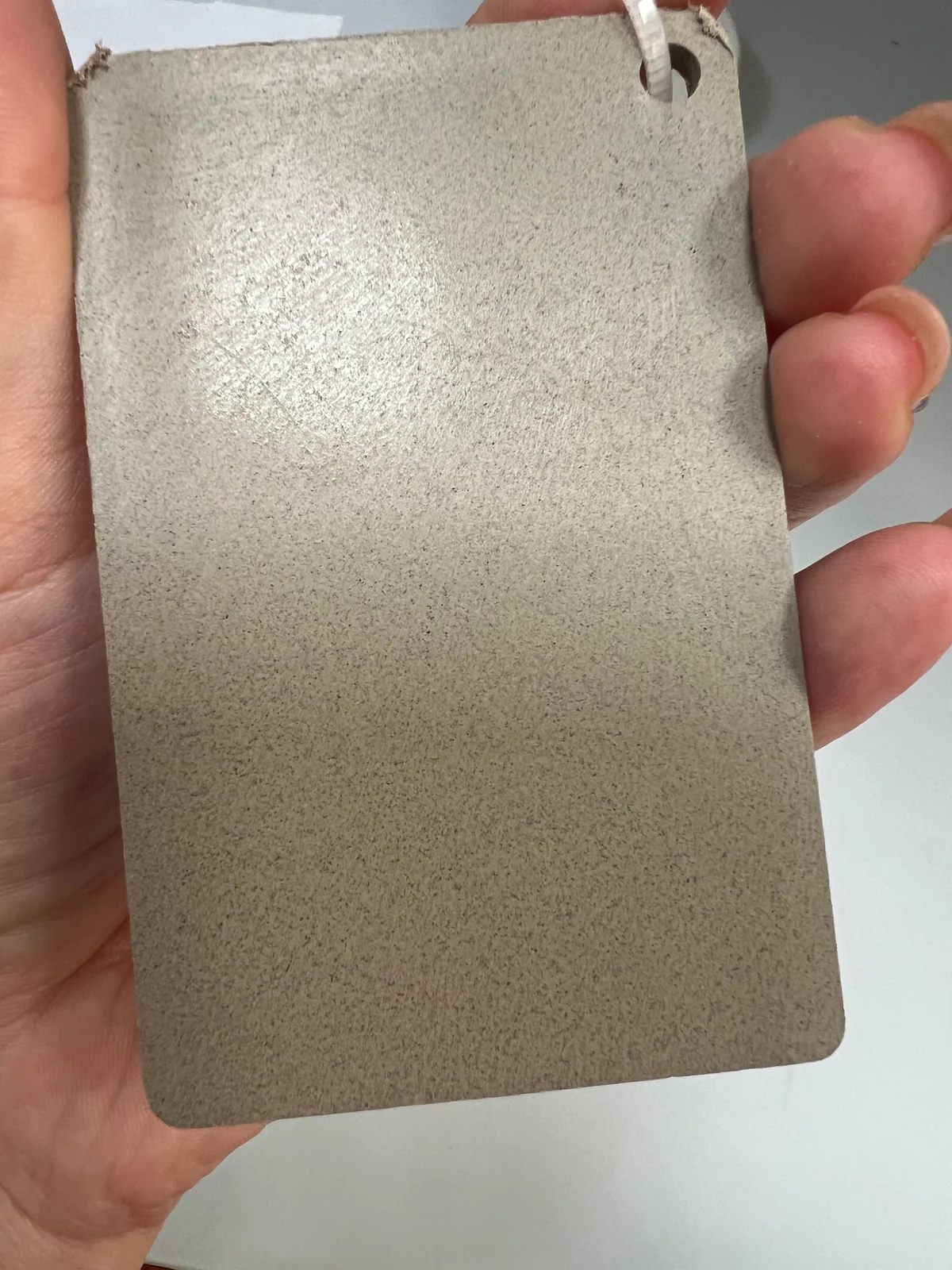
Conclusion
wooyopet’s role is not simply to sell plant-fiber masterbatch. The objective is to turn tea fiber, wheat straw and grain fiber from materials that can be added into materials that can be molded consistently, controlled visually and validated for the intended food-contact condition.
Packaging regulation and buyer demand continue to reward lower-virgin-material and circular design. Tea-fiber masterbatch offers a distinctive color, texture and feedstock story for tea packaging, pet products and household goods. Its commercial value comes from combining that recognizable material identity with stable molding, controlled appearance and application-specific compliance.
Teams evaluating tea-fiber masterbatch, tea-residue PP or an injection-molded tea-packaging program can contact wooyopet for samples, part-specific processing guidance and compliance documents for the proposed final blend.