
Discarded Bamboo Fiber Finds a Second Life in Electronic Accessories—wooyopet's Plant-Fiber Composite Solution
Two Bluetooth earbud accessory projects show how bamboo-fiber PP and ABS behave differently in dimensional control, snap-fit design, surface quality and production tuning.
Buyer and engineer FAQ
Questions about bamboo-fiber compounds for Bluetooth earbud cases
Can the two published MFR values be compared directly?
No. The PP value is measured at 230°C under 2.16 kg, while the ABS value is measured at 220°C under 10 kg. Because both temperature and load differ, the figures describe each grade under its own test condition; they do not prove that one material fills a mold more easily than the other.
Which material is the better starting point for a precision snap-fit charging case?
Bamboo-fiber ABS is generally the stronger starting point when dimensional repeatability, hinge details, tight clips and a firm shell are the priorities. Bamboo-fiber PP can suit a simpler storage case when cost, toughness and lower-load heat resistance matter more, but its mold compensation and wall stiffness must be checked on the actual part.
What usually causes silver streaks on a bamboo-fiber ABS shell?
Residual moisture is the first item to check. Verify dehumidified drying, hopper exposure time and material handling before raising melt temperature. If moisture is controlled, review trapped gas, venting, injection speed and residence time.
Can a mold designed for ordinary PP be used unchanged with bamboo-fiber PP?
It can be used for an initial trial, but the finished dimensions should not be assumed. The documented bamboo-fiber PP shrinkage is 0.8%–1.1%, while the customer mold in the storage-box project had been compensated for 1.5%–2.0% ordinary PP. Measure several stabilized batches, then correct the cavity or process only after the direction and size of the deviation are clear.
For a part-specific recommendation, share the shell geometry, wall thickness, clip and hinge structure, appearance standard, machine size and existing mold material with wooyopet.
Electronic Accessories May Look Similar, but They Do Not Ask the Same of a Material
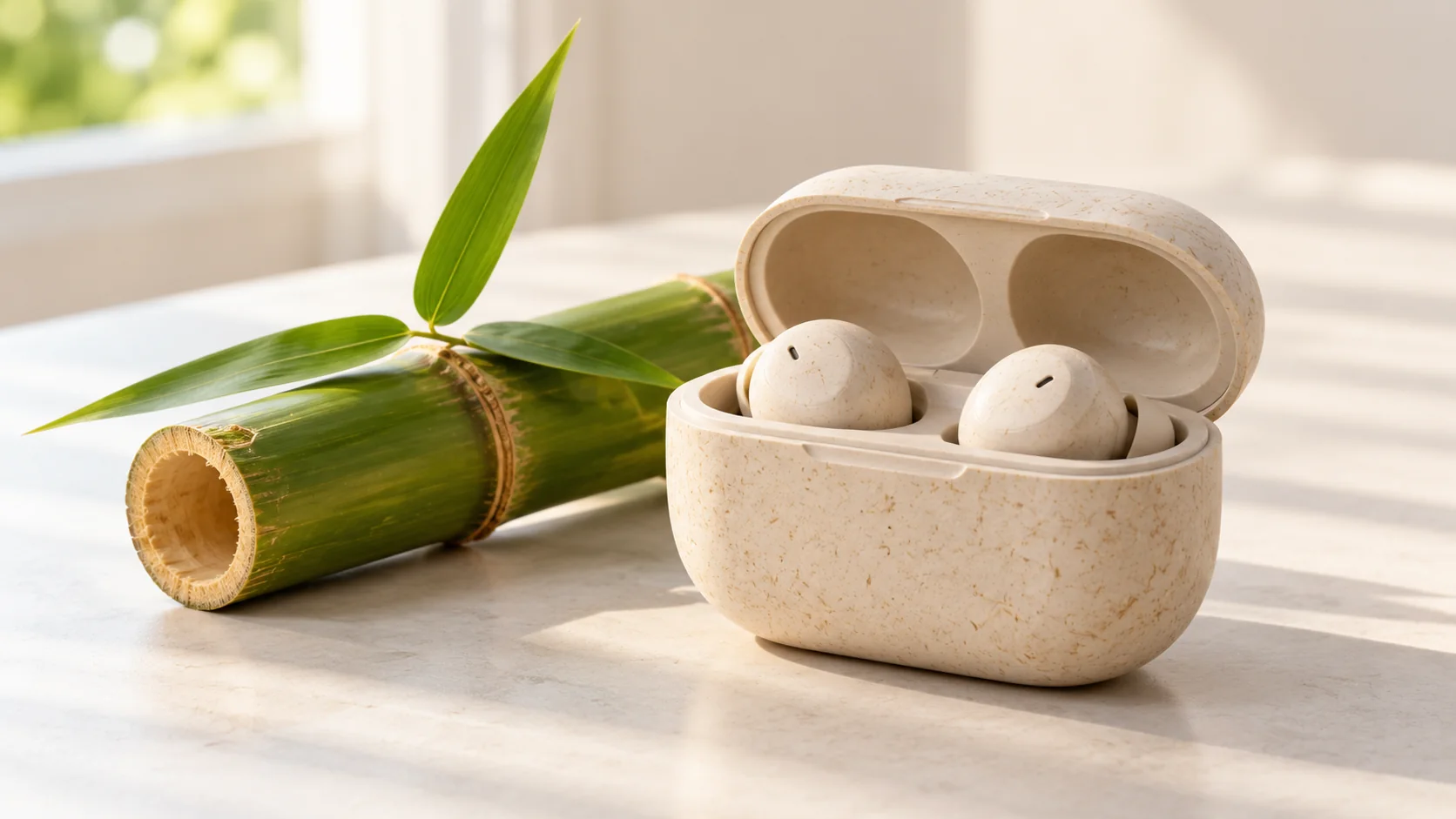
A Bluetooth earbud shell and a simple storage box can look like two versions of the same plastic product. To an injection-molding engineer, however, they are different assignments. The shell around a charging case is usually thin, dimensionally sensitive and full of functional details: hinge seats, charging-port openings, snap fits, mating edges and narrow gaps that are immediately visible. A storage box can have a thicker wall and a simpler structure, yet it still needs enough rigidity to resist sidewall flex, a clean matte surface, repeatable closure and stable dimensions after cooling.
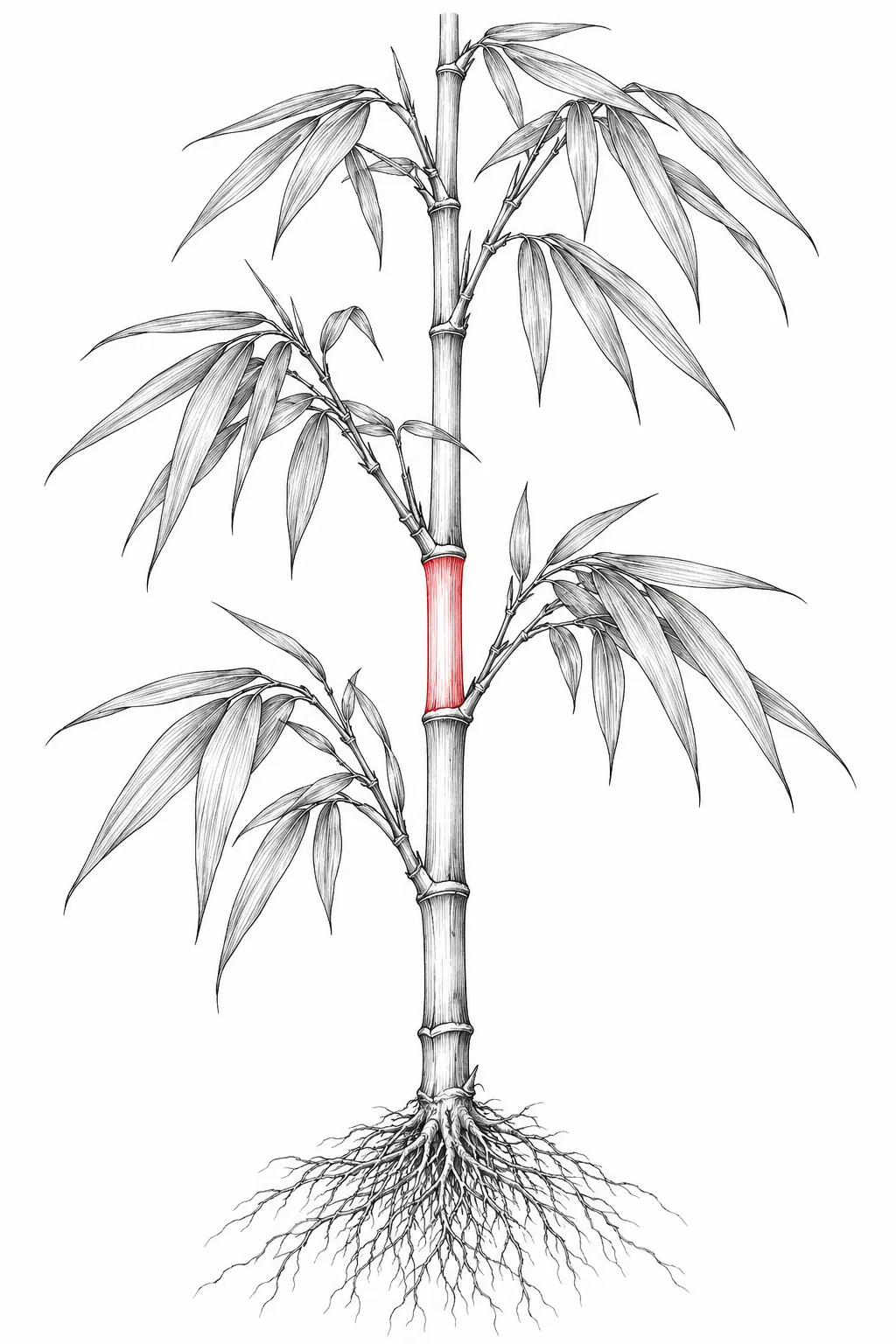
These requirements are why a request for “bamboo-fiber plastic” is not enough to select a resin. The plant fiber can create a recognizable natural grain and replace part of the conventional resin, but the polymer matrix still controls much of the melt behavior, shrinkage, toughness, heat response and tooling strategy. The same bamboo source paired with PP and ABS produces two materials with distinct processing windows and different application boundaries.
wooyopet developed the two compounds discussed here for injection-molded parts: a bamboo-fiber PP and a bamboo-fiber ABS. This article compares their verified property data, then follows two projects from the first trial through dimensional and surface corrections. The purpose is practical: to show where each material fits, which settings provide a sensible starting point, and which apparent material defects are actually mold or process problems.
The environmental proposition should also be described accurately. Both grades use a conventional thermoplastic matrix. Bamboo fiber can introduce a recovered plant component and reduce the wholly petrochemical share of the compound, but neither PP nor ABS becomes inherently biodegradable simply because bamboo fiber is added. A credible project should document the fiber source and content, validate service life, and use the recycling or disposal route available in the target market.
1. Two Bamboo-Fiber Compounds, Two Engineering Roles
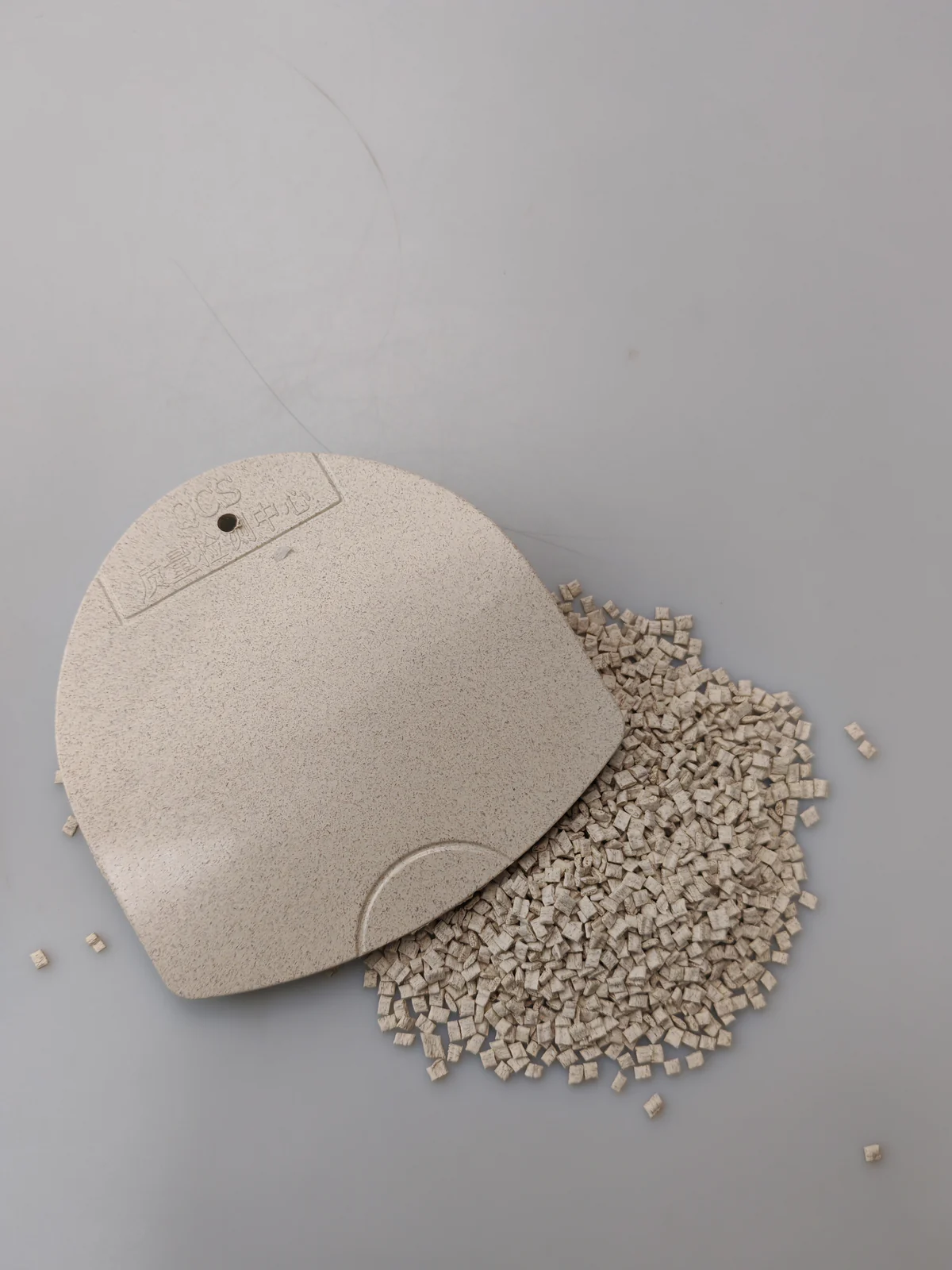
The PP-based grade combines polypropylene with processed bamboo fiber. In its natural form it is light in color, carries fine visible plant particles and may retain a mild bamboo note. Its relatively low shrinkage for a PP-based compound and its 2,420 MPa flexural modulus make it useful for housings, organizers and accessory parts that need a firmer feel than unfilled PP.
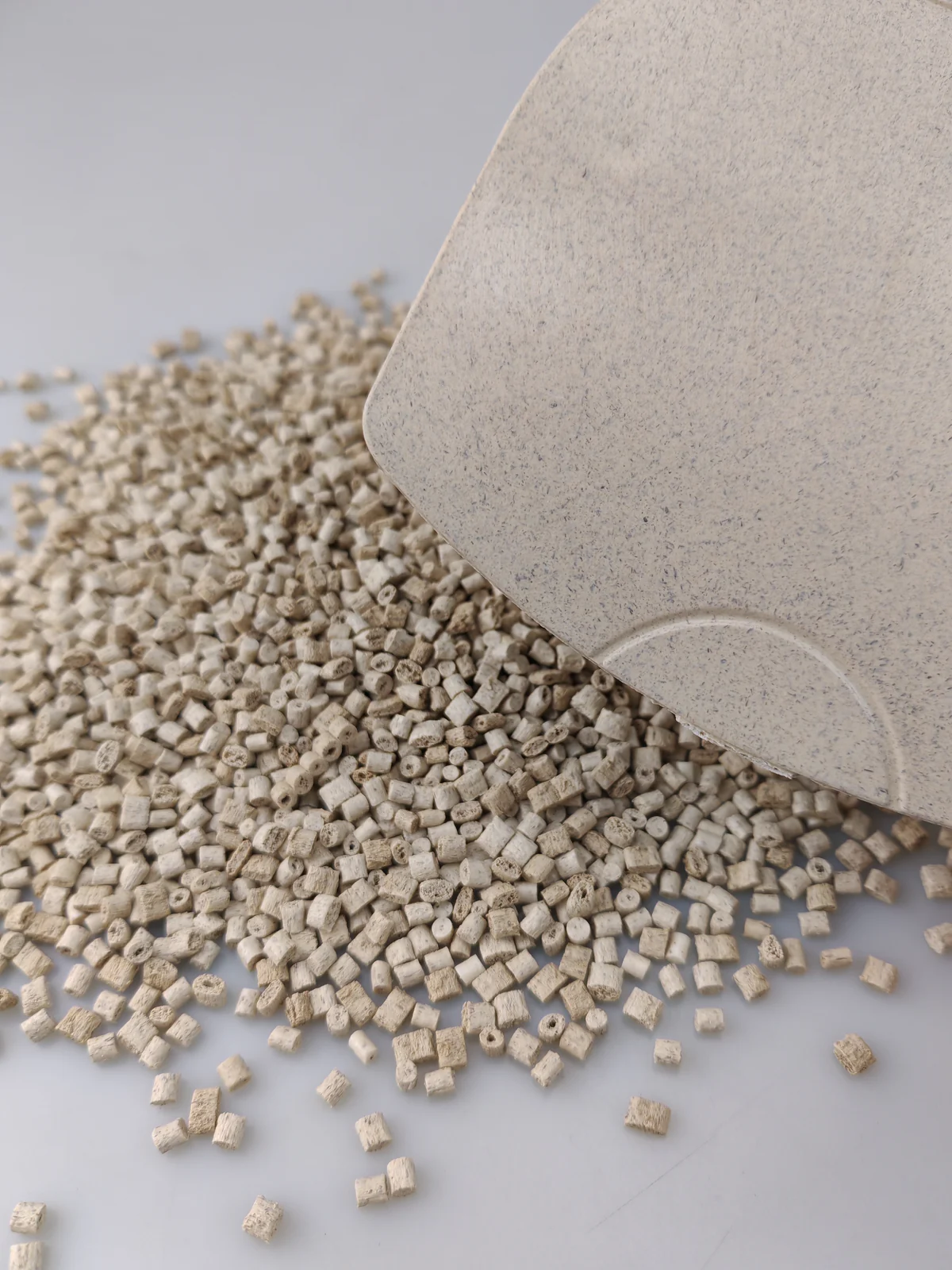
The ABS-based grade uses the same material concept with an ABS matrix. It provides higher tensile and flexural strength, a higher flexural modulus, greater surface hardness and tighter molding shrinkage. Those characteristics make it a stronger candidate for shells with snap fits, hinges and close assembly tolerances. The distinction is not that one material is “better” in every respect. It is that the two matrices distribute stiffness, impact response, heat behavior, shrinkage and processing differently.
| Property | Bamboo-Fiber PP | Bamboo-Fiber ABS | Design Relevance |
|---|---|---|---|
| Material identification | PP + bamboo fiber | ABS + bamboo fiber | Matrix selection changes tooling and end-use behavior |
| Natural appearance | White / pale, fine bamboo grain | White / pale, fine bamboo grain | Confirm the molded plaque because plant particles affect final tone |
| Density | 1.19 g/cm³ | 1.10 g/cm³ | Useful for part-mass and material-consumption calculations |
| Melt-flow rate | 13.6 g/10 min at 230°C / 2.16 kg | 8.5 g/10 min at 220°C / 10 kg | Test conditions differ; do not rank flow from these values alone |
| Molding shrinkage | MD 0.8%–1.1% | 0.4%–0.6% | ABS is the more natural starting point for precision fit |
| Tensile strength | 35 MPa | 40 MPa | ABS provides the higher tensile value |
| Elongation at break | 4.8% | 2.5% | Geometry must avoid sharp stress concentration in both grades |
| Flexural strength | 62 MPa | 73 MPa | Relevant to sidewall and lid resistance |
| Flexural modulus | 2,420 MPa | 2,800 MPa | ABS produces the firmer shell at comparable geometry |
| Notched Izod impact, 23°C | 4.0 kJ/m² | 5.0 kJ/m² | Part design and weld-line position remain decisive |
| Shore hardness | 74 HD | 78 HD | ABS gives the harder surface feel |
| Heat-deflection temperature | 90°C at 1.82 MPa; 126°C at 0.45 MPa | 85°C at 1.82 MPa | Values must be compared at the same load |
| Melting / stated thermal transition value | 170°C | 170°C | Use supplier process ranges rather than this value alone |
Why the MFR Numbers Cannot Be Read as a Head-to-Head Flow Ranking
The PP grade is reported at 230°C under a 2.16 kg load. The ABS grade is reported at 220°C under a 10 kg load. Increasing the test load can raise the measured flow result substantially, while changing temperature alters viscosity in another way. A number of 13.6 and a number of 8.5 obtained under these different conditions do not establish that the PP grade will fill a given earbud shell more easily.
For mold filling, use the actual material, machine and geometry. Gate thickness, runner balance, venting, wall transition, injection-speed profile and melt residence time can matter more than the published MFR. The published value is useful for incoming consistency and grade identification when the same method and condition are repeated.
Stiffness and Shrinkage Define the First Selection Boundary
At 2,800 MPa, the ABS compound has approximately 16% more flexural modulus than the PP compound at 2,420 MPa. That difference is visible in a thin shell: the ABS part resists sidewall flex more strongly and gives a firmer snap-fit response. Its stated shrinkage range of 0.4%–0.6% is also narrower and lower than the PP compound’s 0.8%–1.1%, which reduces the amount of dimensional movement the mold designer must compensate.
The PP grade is still substantially stiffer than many ordinary unfilled PP grades, and its higher elongation value can be useful where a thicker, simpler part benefits from a less rigid feel. It also reports a 126°C heat-deflection temperature at the lower 0.45 MPa load. That figure must not be compared directly with the ABS value reported at 1.82 MPa. At the same 1.82 MPa load, the PP value is 90°C and the ABS value is 85°C—close enough that actual part stress, wall thickness and thermal exposure deserve more attention than a headline temperature.
2. Project One: A PP Bluetooth Earbud Storage Box
The first customer produced a rectangular storage box for true-wireless earbuds. The part used a 2.5 mm nominal wall and a perimeter snap fit. The existing mold had been developed for ordinary PP with an assumed shrinkage of approximately 1.5%–2.0%. The customer wanted to retain the mold while replacing the smooth conventional appearance with a pale bamboo-fiber texture.
First Trial: The Surface Was Acceptable, but the Closure Was Loose
The initial settings were 110°C drying for four hours, barrel zones of 160°C rear, 170°C middle and 172°C front, a 170°C nozzle, a 75°C mold and medium injection speed. The molded surface was evenly matte and the fine bamboo particles were well distributed. Two functional problems remained: the snap fit felt loose and a visible gap appeared along the mating edge. The long sidewalls also flexed more than the product team expected.
The first diagnosis was dimensional. The bamboo-fiber PP compound shrinks 0.8%–1.1% in the machine direction, materially less than the shrinkage allowance built into the ordinary-PP mold. A cavity compensated for higher shrinkage will not automatically produce the intended final dimensions when a lower-shrinkage compound is used. The mold cavity was therefore corrected around a 0.9% trial value, then dimensions were measured across stabilized samples rather than from the first hot shots.
Holding, Mold Temperature and Moisture Were Corrected Together
The mold temperature was increased from 75°C to 78°C, holding pressure rose by 10%, and holding time was extended by two seconds. Drying time was extended from four to five hours at the same 110°C target using dehumidified air. These changes were not intended to “force” the material into the mold. They stabilized the flow front, improved pressure transfer before gate freeze and removed residual moisture that could disturb the surface around the closure.
After dimensional correction, the snap engaged consistently and the mating gap closed. The sidewall, however, still felt softer than the target. This was a structural question rather than a reason to keep raising pressure. Increasing the nominal sidewall from 2.5 mm to 2.8 mm produced the required hand feel with less risk of introducing local stress at the clip.
Stable Result
Production yield improved from 79% during the first trial to 93% after cavity compensation, drying and holding were stabilized. The pale bamboo texture remained visible without a coating, and measured batch color difference was controlled to ΔE 1.5 or below under the customer’s agreed inspection method. The project confirmed that bamboo-fiber PP can suit a medium-precision electronic storage case, provided the mold is not treated as dimensionally interchangeable with an ordinary-PP tool.
| PP Storage-Box Item | First Trial | Stable Direction | Reason |
|---|---|---|---|
| Drying | 110°C / 4 h | 110°C / 5 h, dehumidified | Reduce moisture-related surface variation |
| Barrel | 160 / 170 / 172°C | Kept within the approved 155–175°C zones | Avoid unnecessary heat history |
| Nozzle | 170°C | 170°C starting point | Stable flow without scorching the fiber |
| Mold | 75°C | 78°C | Improve surface replication and pressure transfer |
| Holding | Baseline | Pressure +10%; time +2 s | Improve closure dimensions before gate freeze |
| Sidewall | 2.5 mm | 2.8 mm | Meet the target stiffness by structure, not excessive packing |
| Yield | 79% | 93% | Measured after the combined mold and process corrections |
3. Project Two: An ABS Bluetooth Charging-Case Shell
The second customer produced the outer shell for a Bluetooth earbud charging case. Compared with the PP storage box, this part had thinner walls, a hinge region, tight mating lines and a higher cosmetic requirement. The existing process used ordinary ABS: 80°C drying for two hours, barrel settings of 180°C rear, 190°C middle and 200°C front, a 200°C nozzle, a 50°C mold and fast injection.
Applying the Ordinary-ABS Recipe Created Three Defects
The first bamboo-fiber ABS parts showed silver streaks, visible flow marks and a sink near the hinge. Silver streaks pointed first to insufficient drying: plant fiber introduces more moisture sensitivity than the customer’s ordinary ABS routine was designed to handle. Fast injection into a cool mold also made the flow front less uniform and made weld and flow patterns easier to see on the pale matte surface.
The hinge sink needed a separate diagnosis. It was located in a locally thick, pressure-sensitive area far enough from the gate that packing was less effective as the gate froze. Raising overall packing alone could have overpacked the rest of the shell. The solution needed to improve the pressure path and reduce the local mass.
Drying and Temperature Window Came First
Drying was changed to 95°C for five hours with a dehumidified dryer. The barrel was reset to 170°C rear, 178°C middle and 190°C front, with a 190°C nozzle. Mold temperature rose from 50°C to 70°C, injection speed moved from fast to medium-low, holding pressure increased by 15%, and holding time increased by three seconds.
After this change, the silver streaks disappeared and the visible flow marks were substantially reduced. The material’s natural matte grain became more even because the melt entered a warmer cavity with a calmer, more stable flow front. This result belongs to the documented part and mold; it should not be turned into a universal claim that bamboo-fiber ABS can never show flow marks. Gate layout, wall transitions, fiber dispersion and venting still determine the final surface.
The Hinge Required a Mold and Geometry Correction
The gate was moved 3 mm toward the hinge to shorten the pressure path. Hinge-region wall thickness was reduced from 2.0 mm to 1.8 mm to remove the local hot spot. After these changes, the team made a smaller second adjustment: holding pressure increased by another 10% from the revised baseline and holding time increased by two seconds. The sink disappeared without creating flash around the mating edge.
Final yield improved from 76% in the first trial to 93%. The shell met the customer’s dimensional inspection for the mating gap and charging-port opening, while the natural fine-grain matte surface was accepted without a secondary paint operation. The project illustrates why the ABS grade is the more natural starting point for a compact precision shell: it combines a 2,800 MPa flexural modulus, 0.4%–0.6% shrinkage and a harder surface, but it still requires plant-fiber drying discipline and part-specific gate design.
| ABS Charging-Case Item | Ordinary-ABS Setup | Stable Bamboo-Fiber Direction | Observed Effect |
|---|---|---|---|
| Drying | 80°C / 2 h | 95°C / 5 h, dehumidified | Silver streaks removed |
| Barrel zones | 180 / 190 / 200°C | 170 / 178 / 190°C | Controlled heat history while maintaining fill |
| Nozzle | 200°C | 190°C | Reduced unnecessary thermal exposure |
| Mold | 50°C | 70°C | More stable flow front and surface replication |
| Injection speed | Fast | Medium-low starting profile | Reduced visible flow disturbance |
| Gate position | Original location | 3 mm toward hinge | Improved packing path to the sink-prone area |
| Hinge wall | 2.0 mm | 1.8 mm | Reduced local mass and cooling differential |
| Yield | 76% | 93% | After drying, process and mold changes |
4. How to Choose Between Bamboo-Fiber PP and ABS
Material selection should start from the function of the specific component. A brand may use ABS for the precision charging-case shell and PP for a simpler protective box or interior tray. Using one plant source does not require using one polymer matrix across every part.
| Product Requirement | Preferred Starting Point | Why | What Still Needs Validation |
|---|---|---|---|
| Thin shell, tight mating line, snap fit or hinge | Bamboo-fiber ABS | Higher modulus, harder surface and 0.4%–0.6% shrinkage | Drop performance, weld lines, clip fatigue and cosmetic limit |
| Thicker storage box with moderate dimensional demand | Bamboo-fiber PP | Practical stiffness, familiar PP molding route and lower-load heat resistance | Wall flex, mold shrinkage compensation and closure force |
| Existing ordinary-PP mold | PP trial with measurement plan | Matrix remains PP, but the filled compound shrinks differently | Cavity dimensions, gate freeze, warpage and snap geometry |
| Premium matte cosmetic shell | ABS trial first | Project achieved a fine, even surface without paint | Approved molded plaque, fiber visibility, ΔE and flow-mark limits |
| Lowest material cost | Quote both final compounds | Part weight, cycle, yield and secondary finishing affect total cost | Delivered price, scrap, coating removal and cycle time |
For a charging case, the ABS grade’s lower shrinkage is often worth more than a nominal material-price difference because assembly rejection can dominate cost. For a box with fewer precision details, PP can be the more straightforward route. Neither choice should be made from the fiber label alone.
5. Starting Processing Windows for Production Trials
The following settings are working references, not guaranteed machine recipes. Screw diameter, residence time, runner layout, mold steel, venting, part thickness and the percentage of regrind will shift the optimum. Begin near the lower end, inspect the melt and molded surface, then change one variable at a time.
| Stage | Bamboo-Fiber PP | Bamboo-Fiber ABS | Control Point |
|---|---|---|---|
| Drying | 100–120°C for 4–5 h | 90–100°C for 4–5 h | Use dehumidified air and protect dried material from reabsorption |
| Rear zone | 155–165°C | 165–175°C | Keep feed stable; avoid excessive residence time |
| Middle zone | 160–175°C | 175–180°C | Use the lowest temperature that provides stable plasticization |
| Front zone | 160–175°C | 180–200°C | Increase only when fill requires it and fiber color remains stable |
| Nozzle | 160–175°C | 180–200°C | Prevent freeze-off without overheating stagnant material |
| Mold | 70–80°C | 60–90°C | Balance surface replication, pressure transfer and cycle |
| Injection speed | Medium starting point | Medium-low for cosmetic shells | Profile by geometry; avoid one high speed through every section |
| Regrind | Keep at or below 20% as a controlled starting limit | Track heat history, color, odor, flow and mechanical retention | |
Regrind should come from known, clean in-house runners or rejected parts of the same formulation. A 20% limit is a conservative project starting point, not an automatic approval for every shell. Multiple heat histories can darken the plant fiber, shift odor, shorten fibers and widen lot-to-lot appearance. If the product has a strict cosmetic requirement, establish separate acceptance limits for virgin-only and regrind-containing production.
6. Troubleshooting the Defects Seen Most Often
| Defect | First Checks | Practical Correction Sequence |
|---|---|---|
| Silver streaks | Moisture, hopper exposure, trapped gas | Verify dehumidified drying and handling; then review venting, speed and residence time |
| Black dots or scorched odor | Excess melt temperature, long residence, dead spots | Lower the hottest zones, reduce residence time, purge and inspect screw/nozzle deposits |
| Flow marks | Cold mold, abrupt speed, gate restriction, wall transition | Stabilize mold temperature, profile speed, inspect gate and improve venting |
| Sink near hinge or boss | Local thickness, long packing path, early gate freeze | Reduce local mass, move or resize the gate, then optimize holding pressure and time |
| Loose clip or assembly gap | Wrong shrinkage allowance, insufficient holding, ejection timing | Measure stabilized parts, correct cavity compensation and tune packing before changing the whole mold |
| Soft sidewall | Wall geometry and unsupported span | Increase rib or wall efficiency; do not rely only on more holding pressure |
| Batch color difference | Fiber source, moisture, regrind, heat history | Use a retained molded standard, control regrind and inspect ΔE under one agreed method |
Plant-fiber compounds also release more gas than neat resin during processing. Mold vents must be clean and sufficient. A vent depth around 0.025–0.038 mm with at least 1.5 mm land width can be evaluated as an initial tooling reference, but the correct depth depends on the resin, mold fit and flash risk. Validate it on the actual tool instead of applying the number as a universal rule.
7. Where These Bamboo Compounds Fit in wooyopet's Material System
wooyopet’s plant-fiber portfolio combines different plant sources with PP, ABS, PE and PA systems. Bamboo-fiber PP occupies the practical housing and organizer position: pale natural appearance, visible fine grain, 2,420 MPa flexural modulus and an injection window compatible with many PP molding operations after drying and mold-temperature adjustments. Bamboo-fiber ABS sits closer to precision consumer-electronics shells: 2,800 MPa flexural modulus, 40 MPa tensile strength, 5.0 kJ/m² notched impact value and 0.4%–0.6% molding shrinkage.
The two Bluetooth projects show that a material change cannot be reduced to exchanging pellets in the hopper. The PP storage box required shrinkage compensation and structural wall adjustment. The ABS charging case required a new drying routine, a warmer mold, a calmer injection profile and a gate-and-hinge correction. In both projects, stable production came from treating material, mold and part design as one system.
Discarded bamboo fiber can gain a useful second life in electronic accessories when it is processed into a consistent compound and matched to the right polymer matrix. The credible value is not a vague environmental label. It is the combination of traceable plant content, reduced reliance on a wholly petrochemical formulation, a distinctive unpainted surface, and a finished part that passes dimensional, assembly and production requirements.
For a new earbud case, begin with the drawing rather than the resin name. Identify the tightest dimensions, clip and hinge loads, visible flow boundaries, wall transitions, drop requirement and acceptable fiber pattern. Then select PP or ABS, mold test plaques, establish a drying and processing window, and validate the finished assembly across multiple lots. That sequence is what turns bamboo fiber from a decorative idea into a repeatable electronic-accessory material.