
How Different Plant Fibers Change the Look and Feel of Plastic
Fine straw speckles, coarse coir strands, warm wood grain and dark coffee flecks: how nine plant fibers give molded plastics a different appearance and touch.
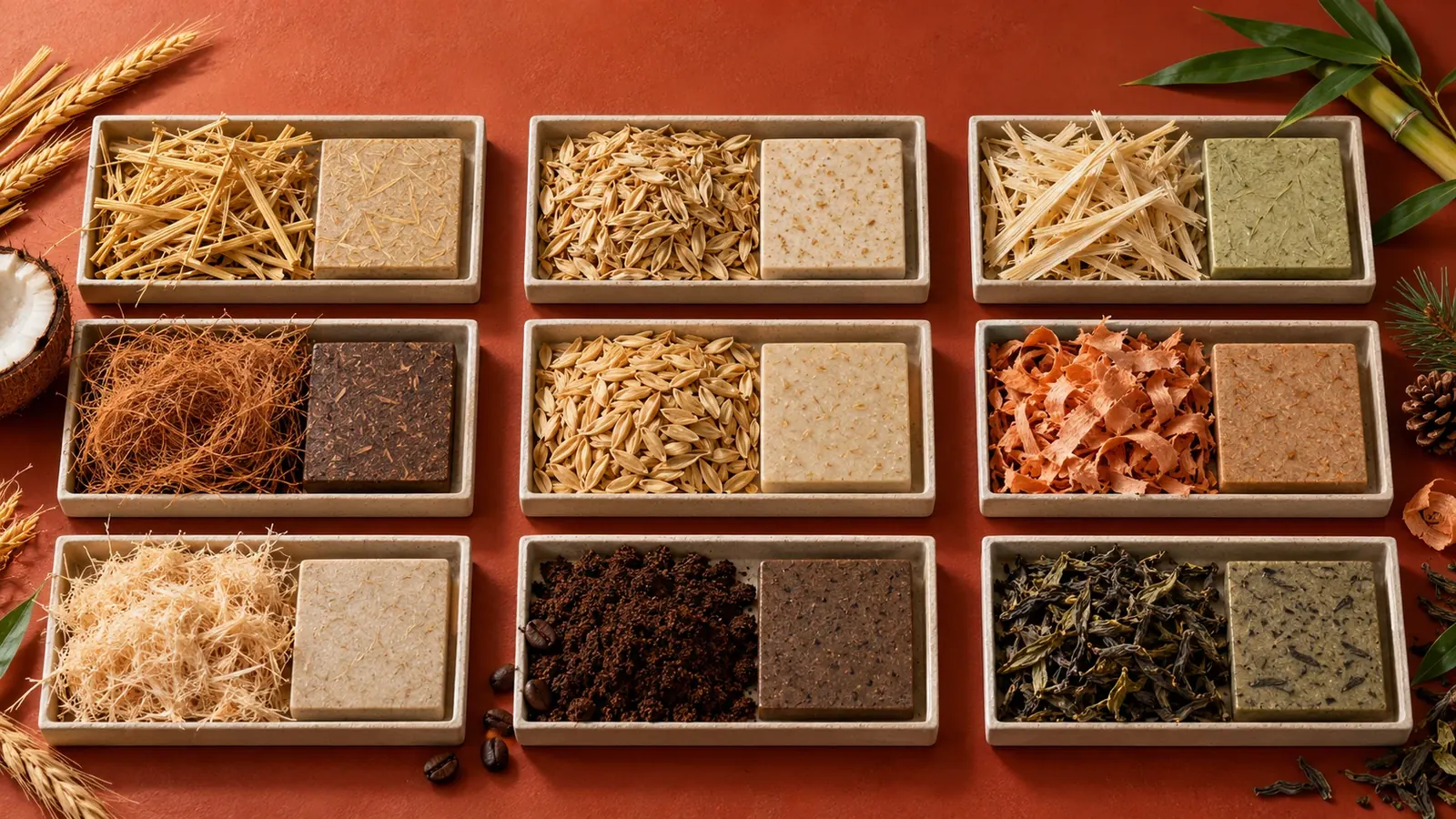
Material selection FAQ
Choosing the plant-fiber look
Which fibers create the most visible texture?
Coconut coir, wood, red pine, bamboo and coffee grounds can produce especially recognizable visual effects, depending on particle size and loading.
Which fibers give a subtler matte look?
Fine cereal fiber and finely processed rice husk are useful starting points for light, low-contrast grain.
Why can the same plant fiber look different in two products?
Particle size, fiber proportion, base resin, color and mold finish all influence the visible grain, gloss and touch.
How can the visible fiber level be adjusted?
Particle cut, color and the addition level of a compatible concentrate can change how strongly fibers appear in the finished part.
The best surface is the one that fits the product's intended appearance and use.
Plant-fiber composite plastics combine processed natural plant material with thermoplastics such as PP, ABS, PA or PE, then turn the compounded pellets into molded or extruded parts. Their most immediate difference from ordinary plastic is often the surface: the plant particles create a natural grain and a different tactile impression without paint or a decorative film. Some formulations also retain a faint plant scent.
But “plant fiber” is a broad description. Wheat straw, cereal fiber, bamboo, coconut coir, rice husk, red pine, wood, coffee grounds and tea residue each bring a different surface language. The following comparison focuses on particle visibility, grain direction, color, gloss and touch. For the wider grade overview, see Characteristics and Applications of Nine Common Plant-Fiber PP Composites.
1. Wheat straw: fine, irregular particles with a lightly matte touch
Wheat straw comes from the stems left after the wheat harvest. Its short fibers can disperse evenly through a plastic matrix, creating a dense, irregular particle texture without directional stripes. The surface has a lightly frosted feel: visually, it resembles finely ground plant stems scattered through the molded plastic.
The natural grain is the main attraction. A finer cut gives a quieter, more uniform finish; larger particles make the straw more visible. On pet feeding bowls, tableware handles and everyday molded goods, this creates a simple, unpolished natural character. Wheat straw is a useful starting point when a product should look recognizably plant-filled while keeping a relatively even surface.
2. Cereal fiber: a finer, more restrained matte grain
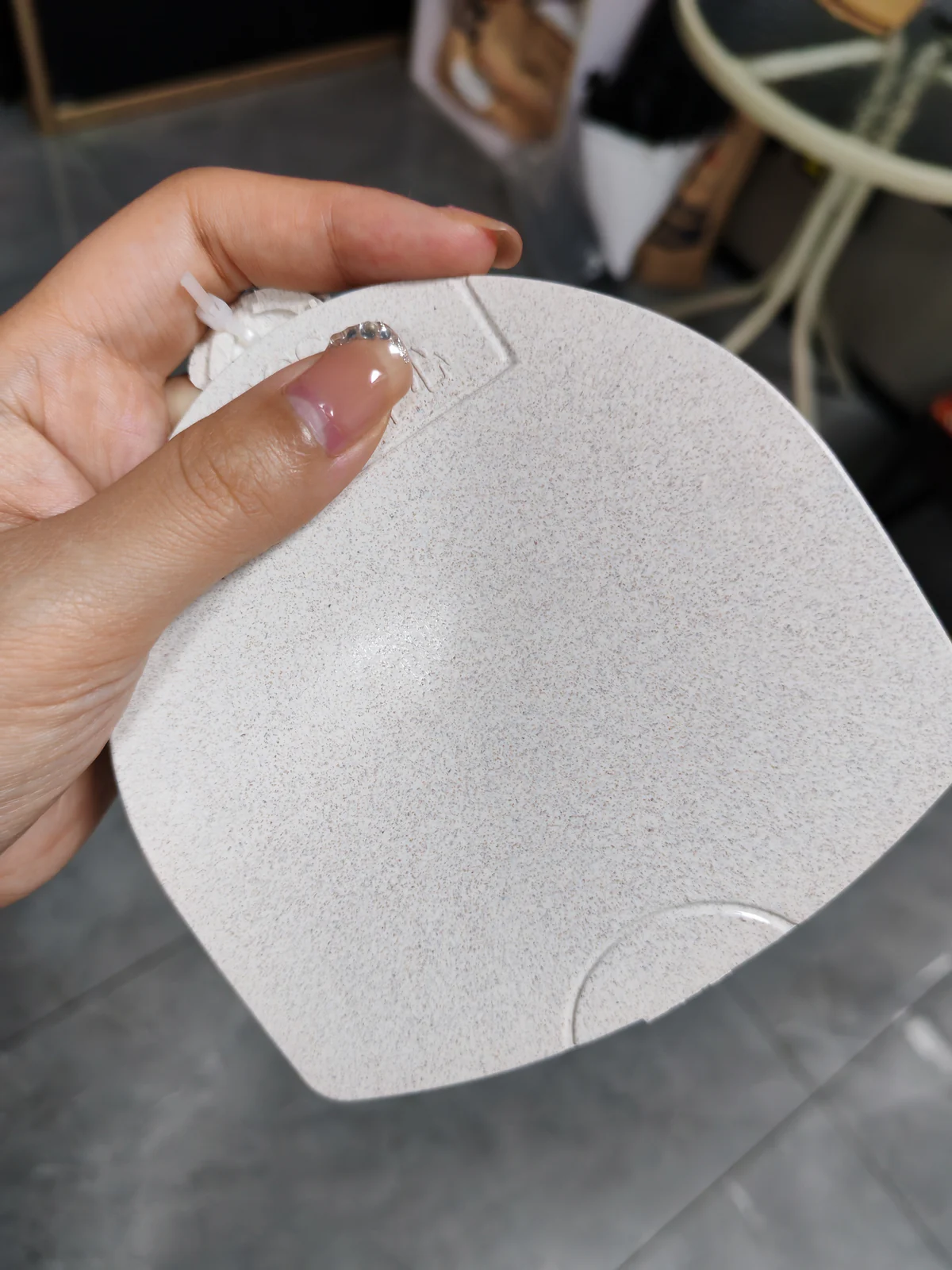
Cereal fiber shares wheat straw's small particles, matte tone and lack of directional texture. In this range, the cereal-fiber route also uses finely processed wheat-stem straw. Its visual difference comes from the selected raw material, particle-size distribution and formulation: the grain can look finer and more uniform, with less individual fiber standing out.
Compared with a more visibly coarse straw finish, this surface gives a tidier, understated impression. The fine pale speckles remain visible at close range, while the whole part reads as an even natural color from farther away. It suits trays, tableware and daily-use products where the plant content should be present without dominating the design.
3. Bamboo: visible fiber traces with a more structured character
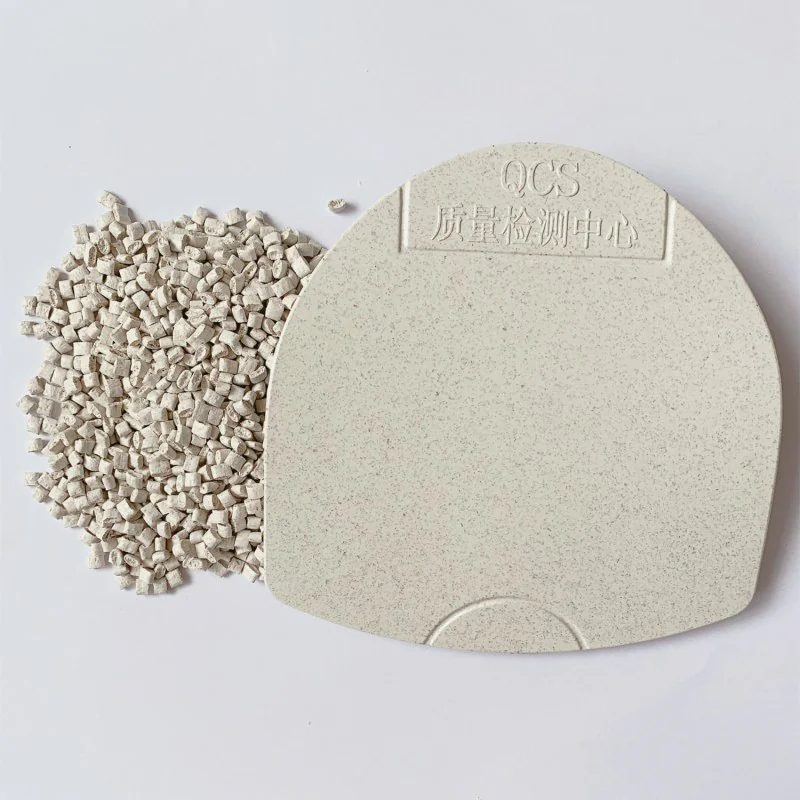
Bamboo's identity comes from more noticeable fiber traces and a potentially more directional grain. Fiber length and molding flow influence how clearly those traces align. Compared with random straw speckles, the surface can suggest a more structured bamboo-like texture. Some formulations also retain a faint bamboo scent.
The actual bamboo-fiber ABS sample has a pale, muted natural tone and a closely dispersed grain. It brings a restrained plant identity to small-appliance housings, electronic accessories, grooming-tool handles and similar parts. Adjusting the fiber cut, color and proportion changes whether the final impression is subtle and smooth or more visibly fibrous.
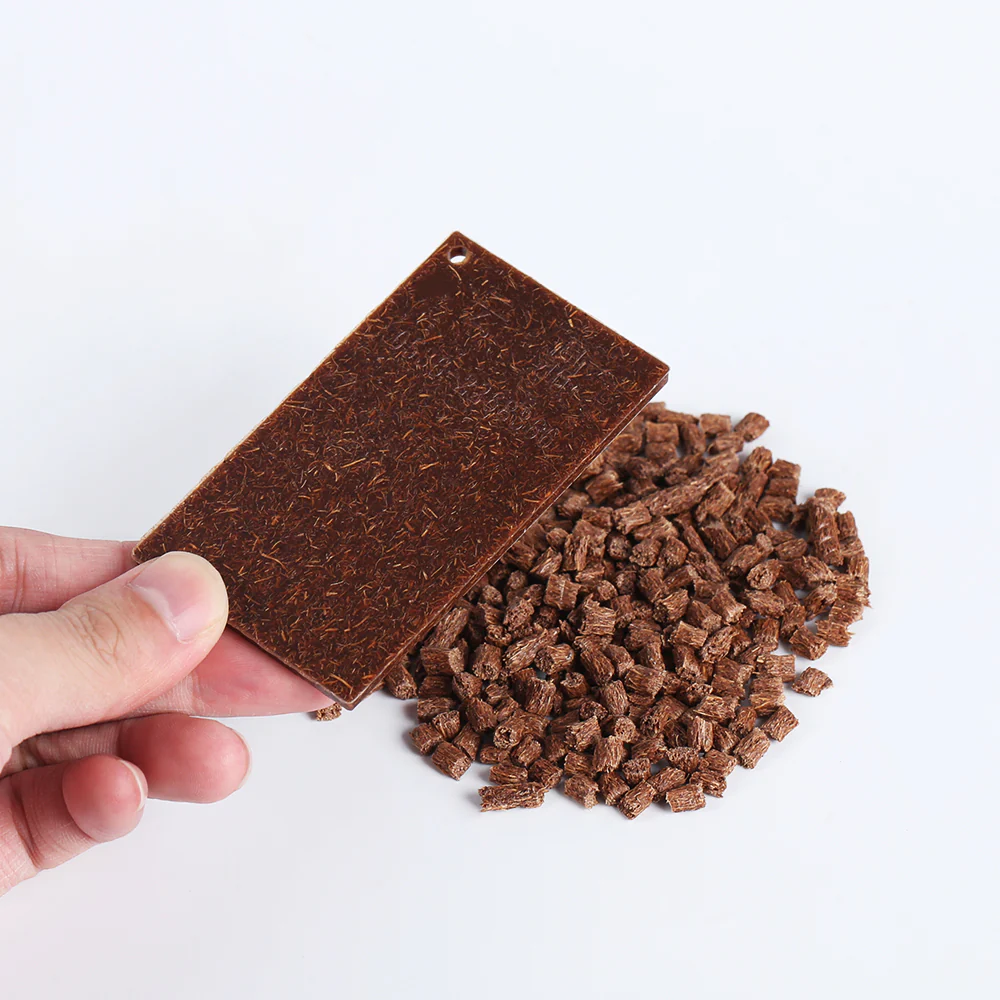
4. Coconut coir: coarse, visible strands with a rugged natural feel
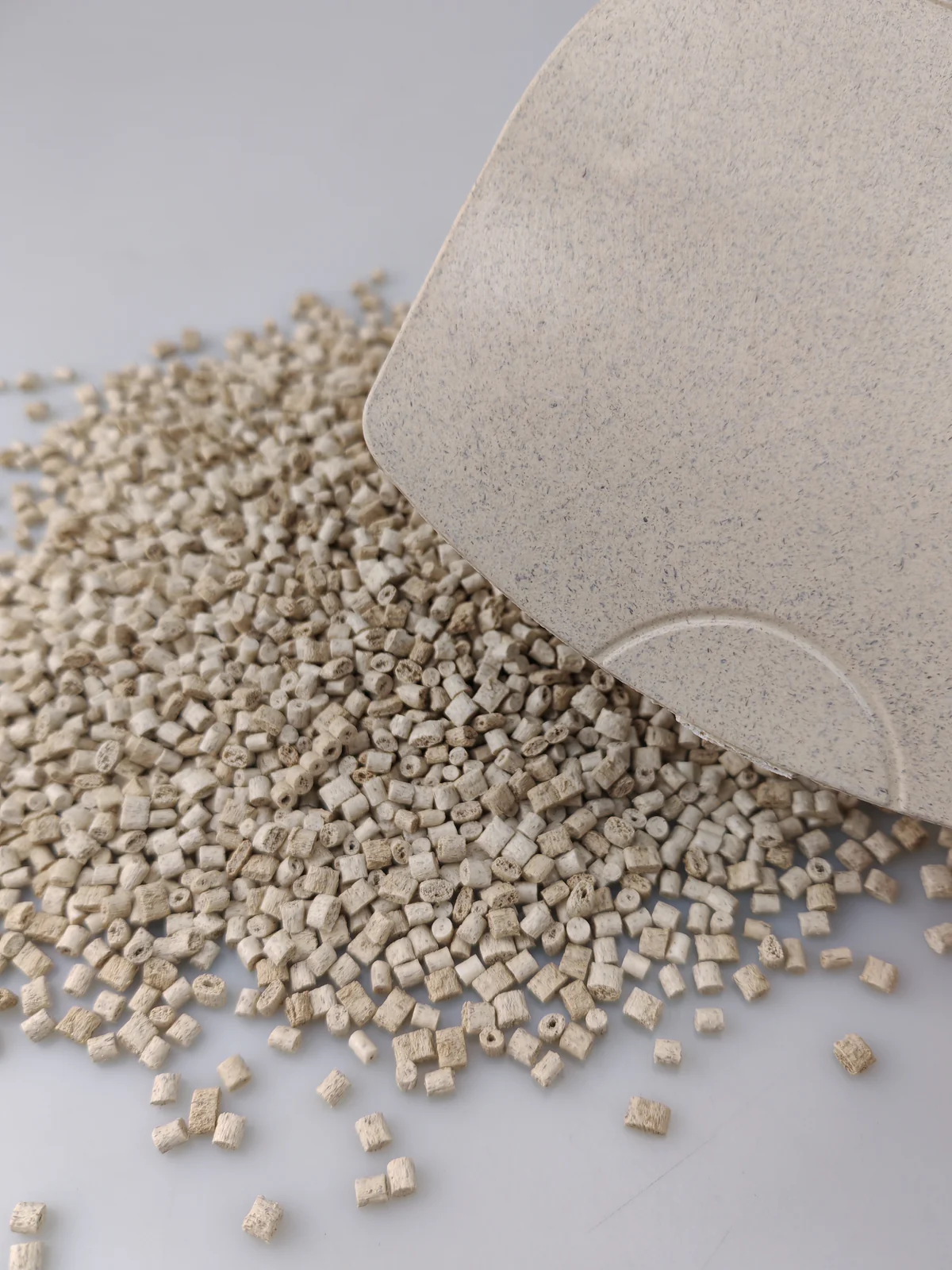
Coconut coir sits between the fine-particle systems and a more ordered bamboo grain. Its signature is coarser, bundled fiber traces with an irregular arrangement. The fibers have a stronger visual presence than finely milled straw or rice husk, giving the surface a rougher, more substantial botanical character.
The dark brown tone reinforces that effect. Coir suits pet accessories and daily-use parts whose design welcomes a rugged natural finish. With a PP- or PE-carrier concentrate, the addition level can be adjusted to make the visible fibers stronger or quieter. It is worth considering when the surface should show substantial plant material instead of particles that almost disappear into the plastic.
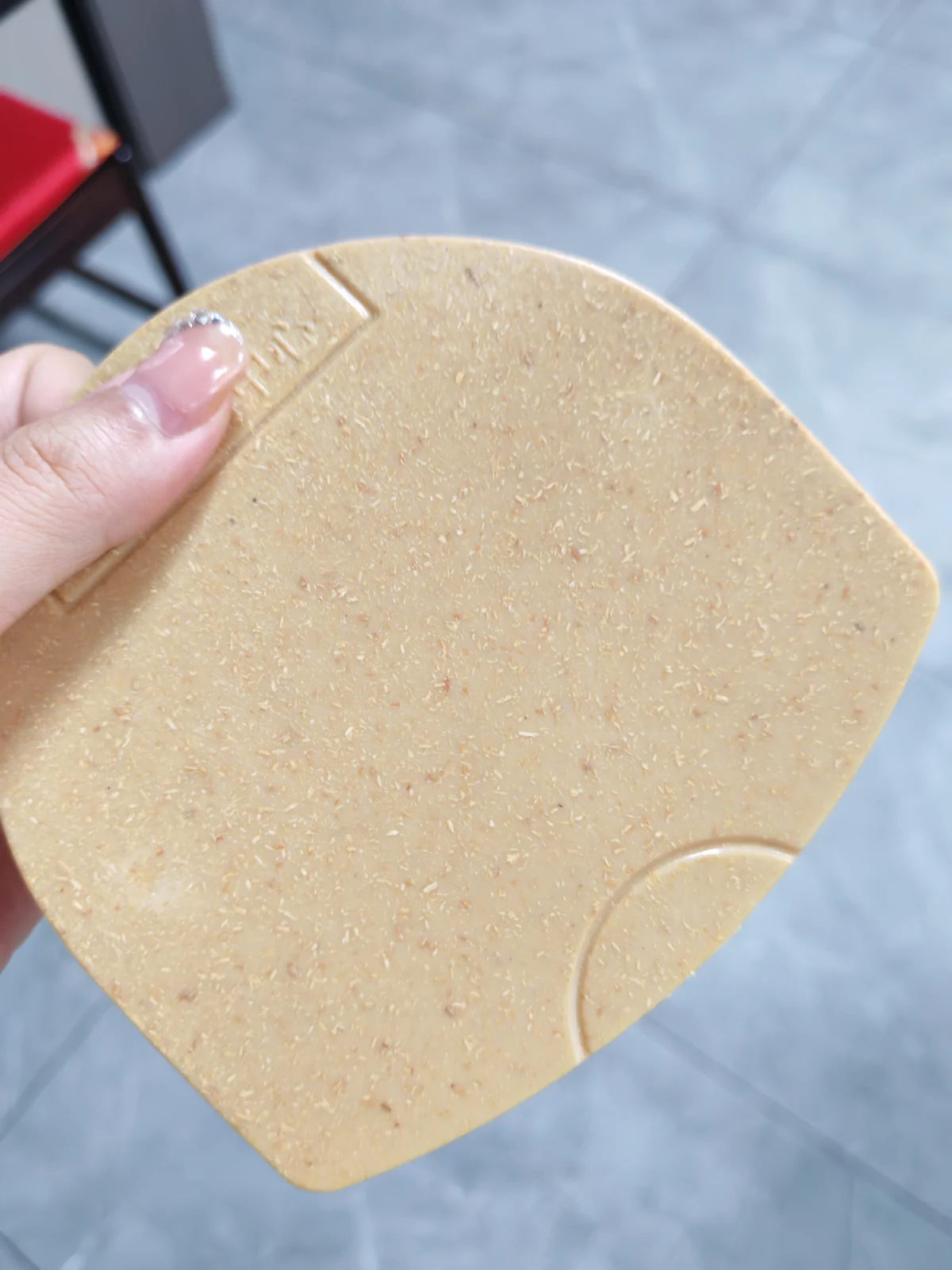
5. Rice husk: a uniform matte surface with a softer visual impression
Finely processed rice husk gives a low-gloss, granular surface with little obvious strand direction. Its natural character comes through the overall grain and touch rather than a bold fiber pattern. At close range, the finish can feel more finely textured and less shiny than a uniformly colored plastic part.
The actual rice-husk masterbatch sample has a warm, earthy color and a compact particle effect. Color and visible grain can be adjusted through the final blend. Home storage goods, household objects and pet-product parts can use this finish when the design should feel natural on contact without relying on pronounced wood-like lines or coarse coir strands.
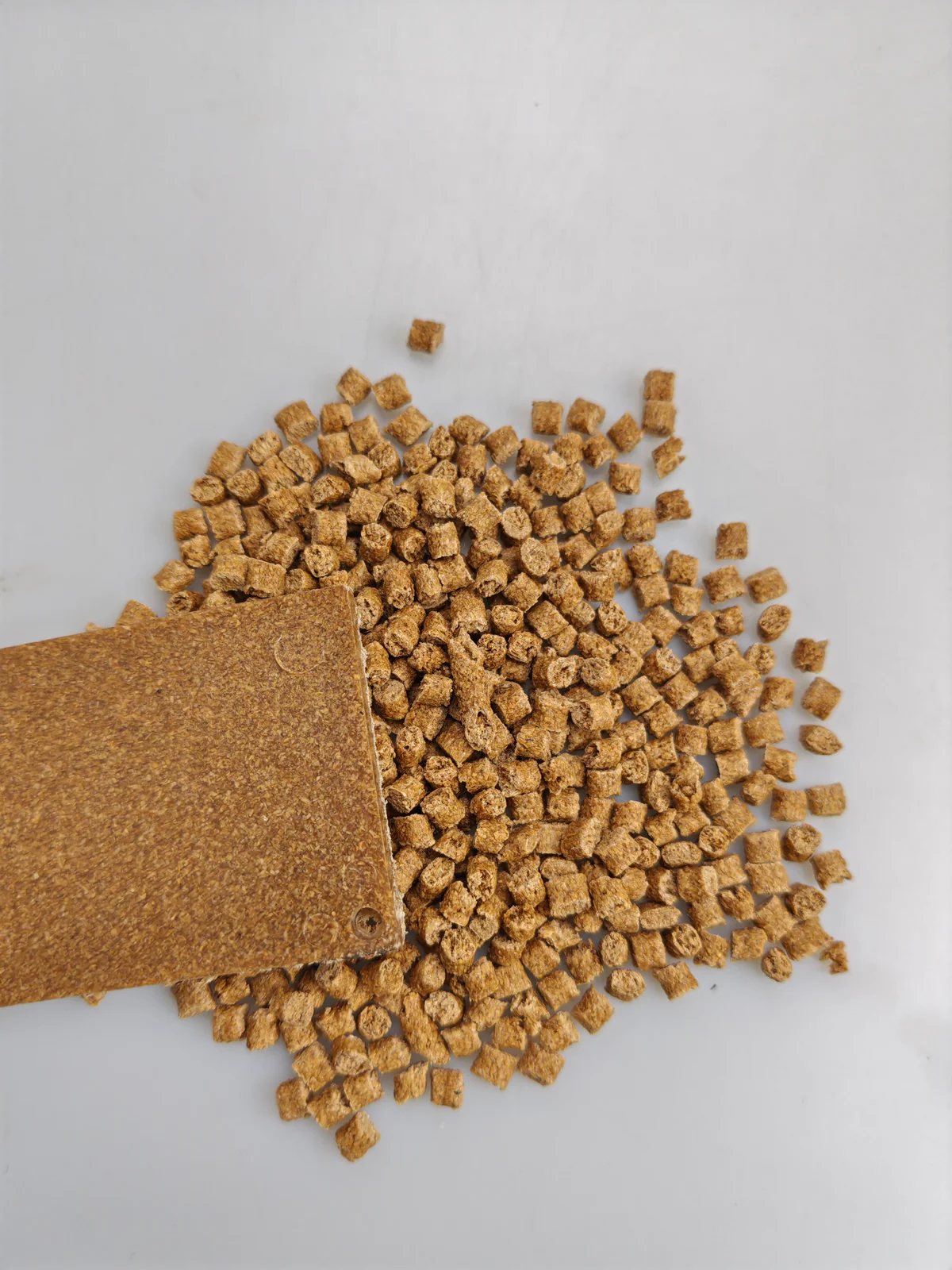
6. Red pine: warm wood-toned particles with a firm character
Red pine brings a warm wood-toned particle grain. Its surface character feels firm and substantial, with a clear woody identity. Compared with coir's coarse strands, the grain is more compact; compared with a pale, fine cereal finish, the woody particles and warmer color are more prominent.
The photographed red-pine PP masterbatch sample shows a honey-brown tone with visible lighter and darker particles. That gives rigid pet-product details, housings and support parts a warm natural character. Red pine is a useful direction when the design should look woody and substantial while keeping an orderly molded form.
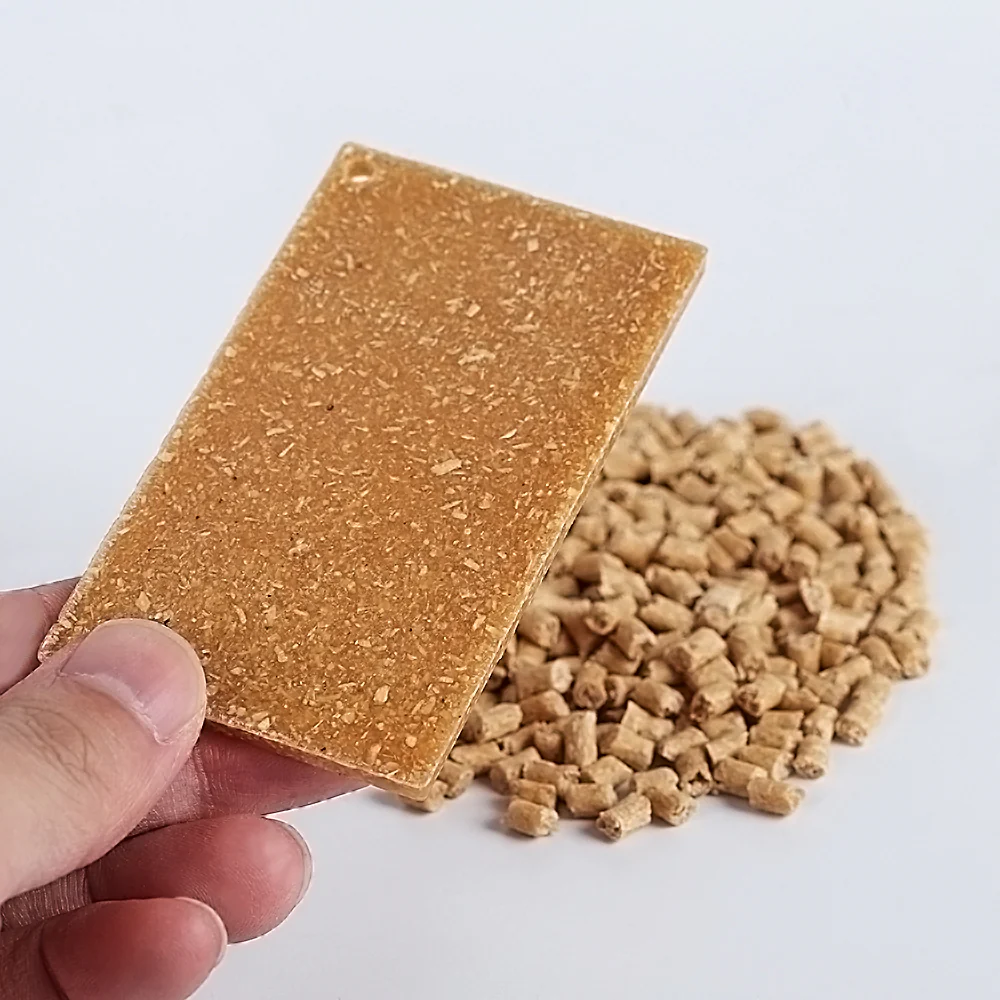
7. Wood fiber: diffuse beige grain with a familiar wood-plastic feel
Wood fiber comes closest to the familiar idea of a wood-plastic material: warm beige grain, diffuse wood particles and a gentle visual impression. Depending on the wood source and processing, a faint natural wood scent may remain. Its grain is less strongly directional than a bamboo effect and less coarse than coconut coir.
Compared with the warmer, more strongly colored red-pine sample, this wood-fiber PP plaque has a lighter, quieter woody finish. Grips, home accessories, interior accents and pet-product parts can use it to make the material feel less like conventional plastic on first contact. It is a direct choice when a recognizable wood-like surface matters more than a strong pattern.
8. Coffee grounds: dark mottling with a distinctive reclaimed-material identity
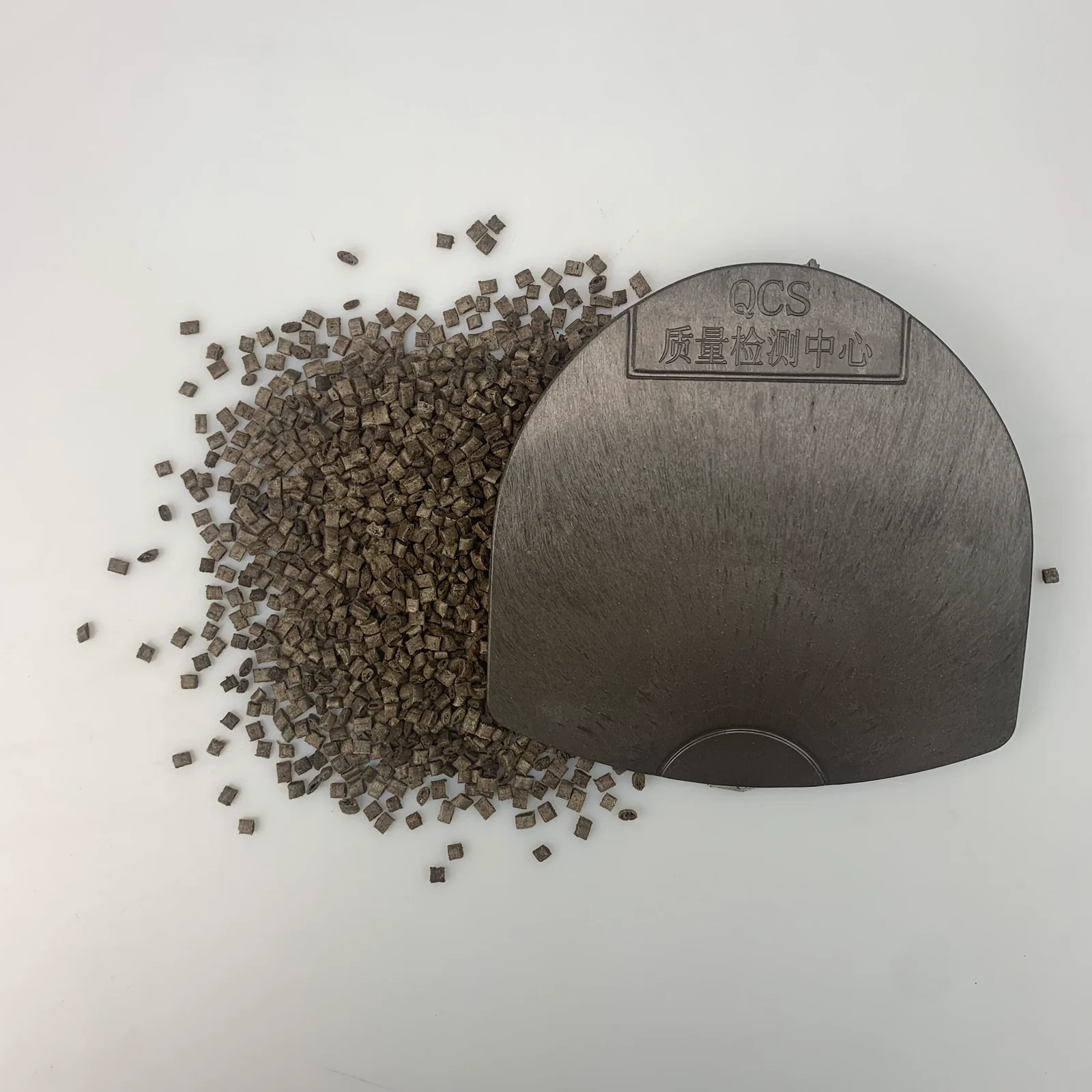
Coffee grounds have a surface identity that is difficult to replace with a light-colored plant filler. Fine dark particles create a deep brown-to-charcoal tone at a distance and a mottled pattern up close. The particles become part of the product's own visual language, giving it a recognizable reclaimed-material character without added paint.
Compared with the light grain of straw, bamboo or wood, coffee grounds create stronger color contrast and a denser-looking finish. Coffee-brand accessories, dark storage details and pet-product components can all use this effect. When a design welcomes flecks, mottling and a deep natural color, the ingredient's origin can be expressed directly through the surface.
9. Tea fiber: fine leaf-like particles in a muted plant-colored finish
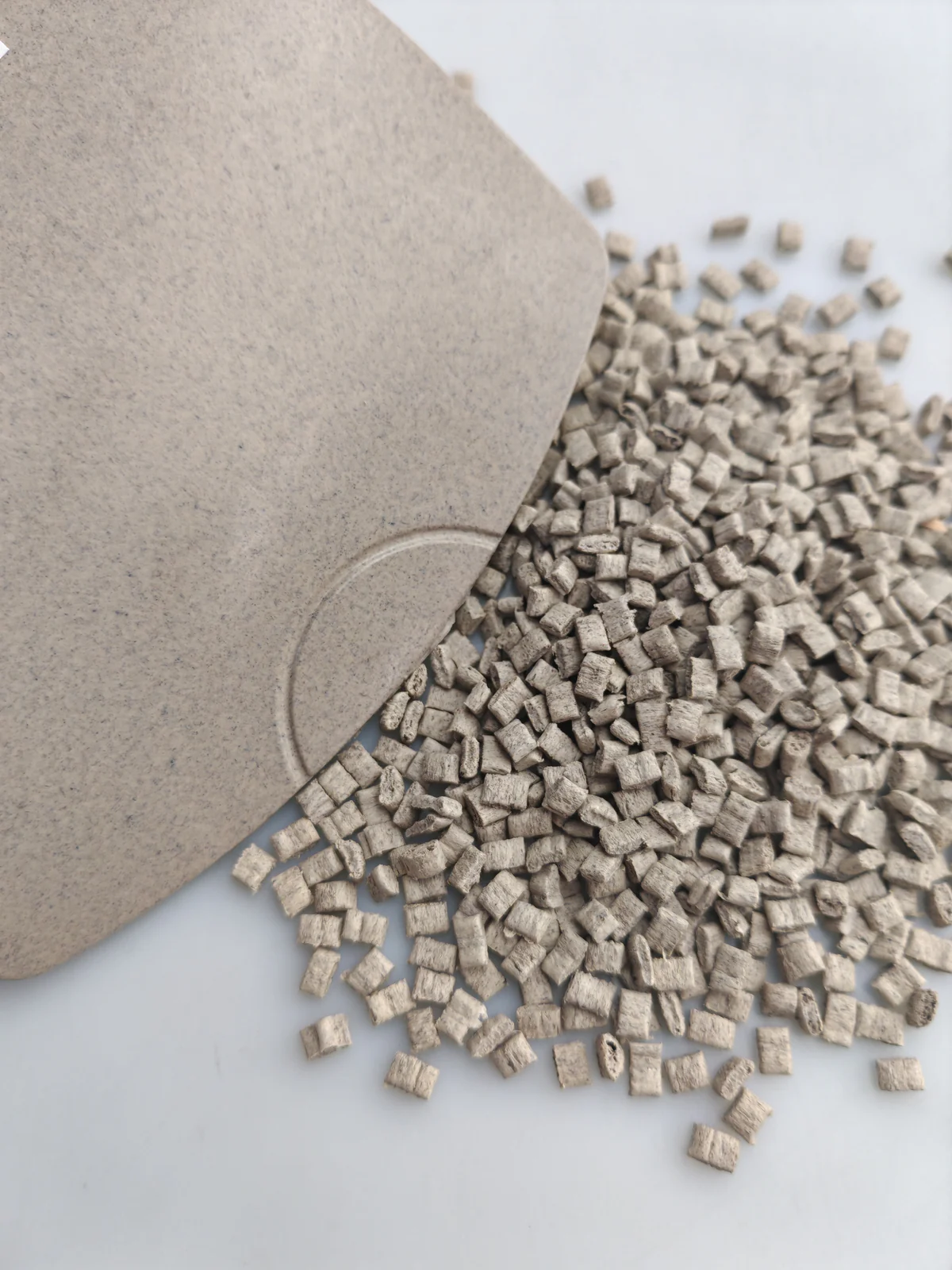
Tea-fiber PP gives a fine leaf-particle texture with muted plant tones. Depending on the tea source and formulation, the color can move through tea-green, gray and beige. The photographed grade has a restrained gray-beige appearance. Some formulations retain a mild tea scent, adding another sensory connection to the plant source.
Compared with coffee's dark mottling, tea fiber has a softer visual presence. Its fine particles can give tea-related products, home accessories and pet feeding details a quiet botanical character. It is a useful option when the design calls for natural flecks and a gentle plant-colored finish rather than coarse strands or a bold wood pattern.
Choose the first impression you want people to see and feel
For a fine, evenly scattered grain, start with wheat straw or fine cereal fiber. For a subtle matte touch, rice husk offers a quieter direction. Bamboo gives more visible fiber traces; coir brings coarse strands and a rugged character. Red pine and wood both create a woody impression, with the red-pine sample looking warmer and more strongly colored and the wood-fiber sample looking paler and more diffuse. Coffee grounds give the strongest dark mottling, while tea fiber offers a softer leaf-particle finish.
WOOYOPET can adjust fiber source, color, particle size and base resin together, then carry that texture into an injection-molded or extruded part. Start with what people should notice in the first glance and first touch: a quiet matte surface, a visible plant grain, a warm wood tone or distinctive dark flecks. That makes the fiber choice a more focused design decision.